Key takeaways
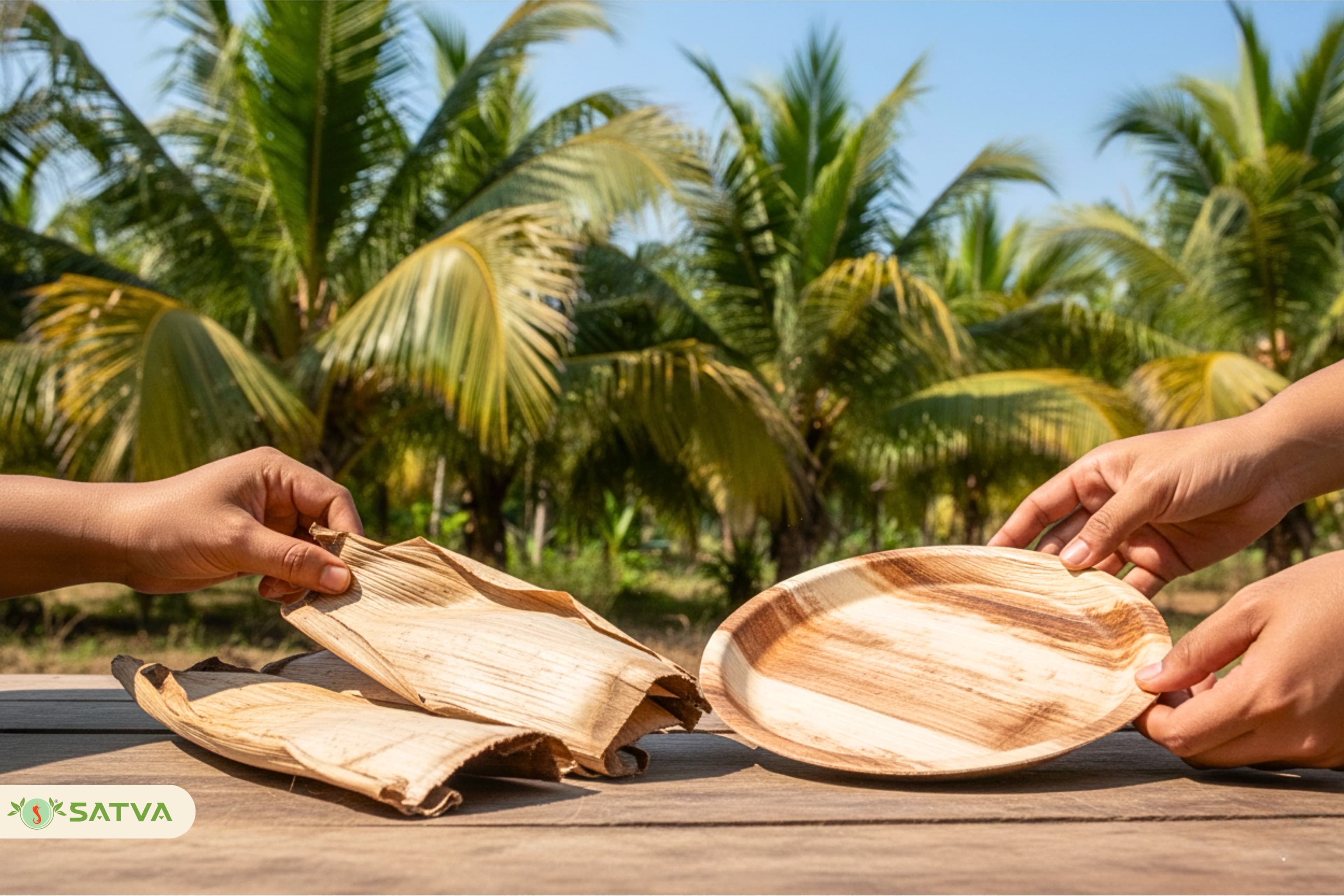
- Every Satva plate and bowl starts as a fallen areca leaf, so no tree is cut.
- Each leaf is collected, washed, dried, pressed, checked and packed.
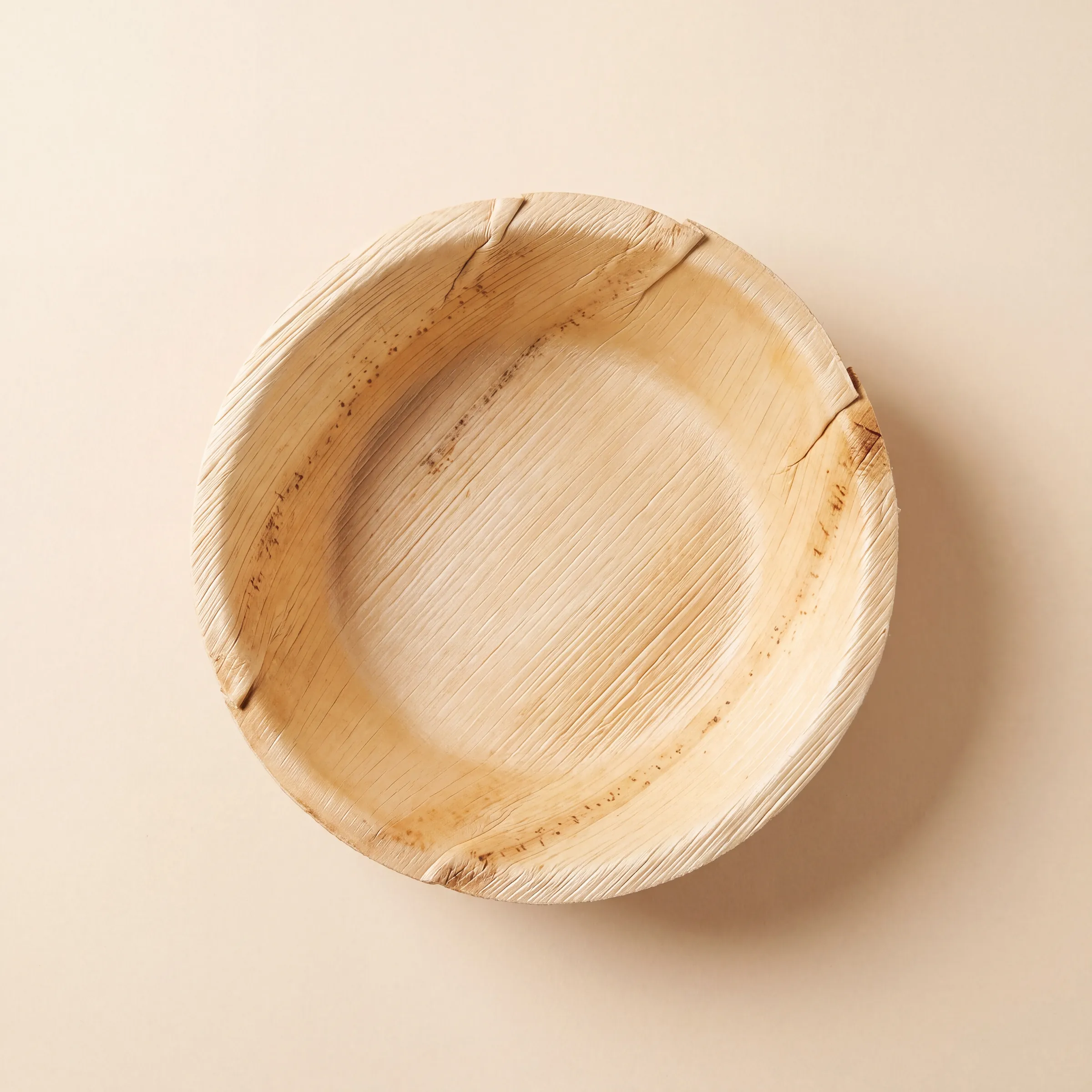
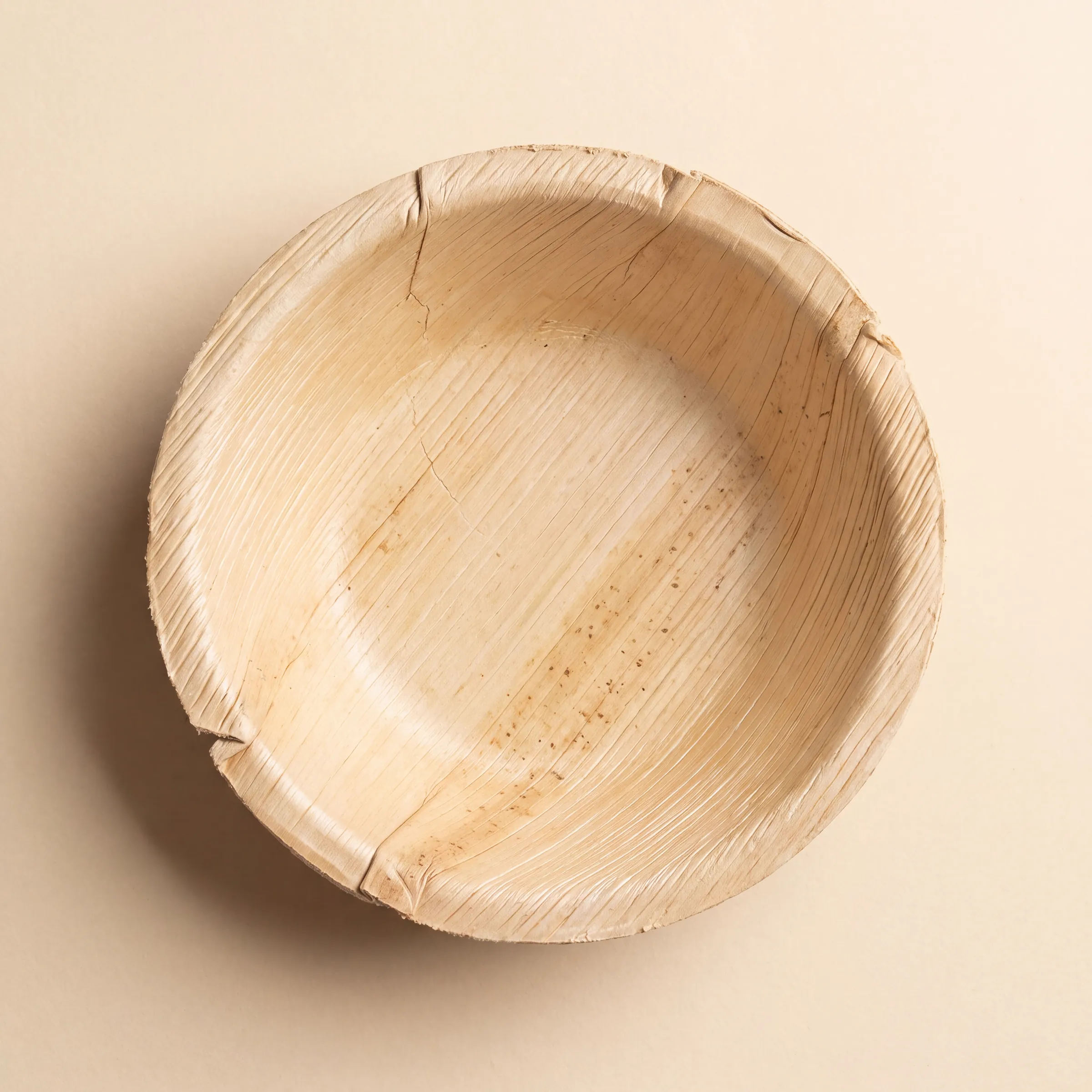
- The mould sets the size, so every piece of a size matches. The leaf sets the colour and grain, so every piece looks a little different.
- SGS, an independent lab, found no arsenic, no PCP and none of the 70 pesticides tested for.
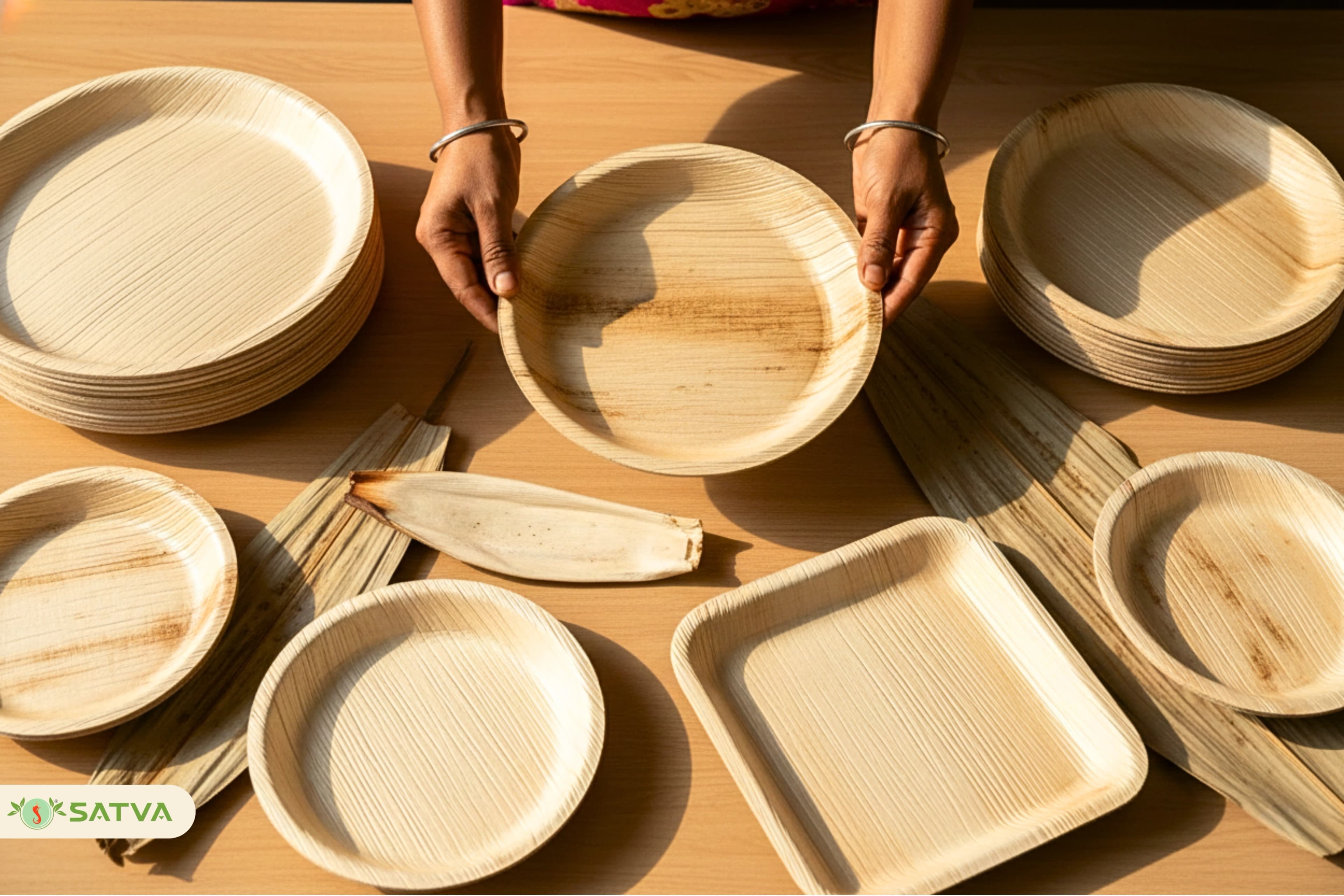
Every Satva plate and bowl starts as a leaf that has already fallen from an areca tree. Our manufacturing partner in Chennai, India, turns those leaves into plates and bowls in six steps. Made in an ISO 9001 certified factory, each piece goes through the same process, whether it ends up at a wedding buffet, a café counter or a catering order.
This guide walks through each step, then explains what the process means when you order.
From fallen leaf to finished plate
1. Collected
Areca trees drop their leaves several times a year. Farmers pick up the fallen ones, so no tree is cut.
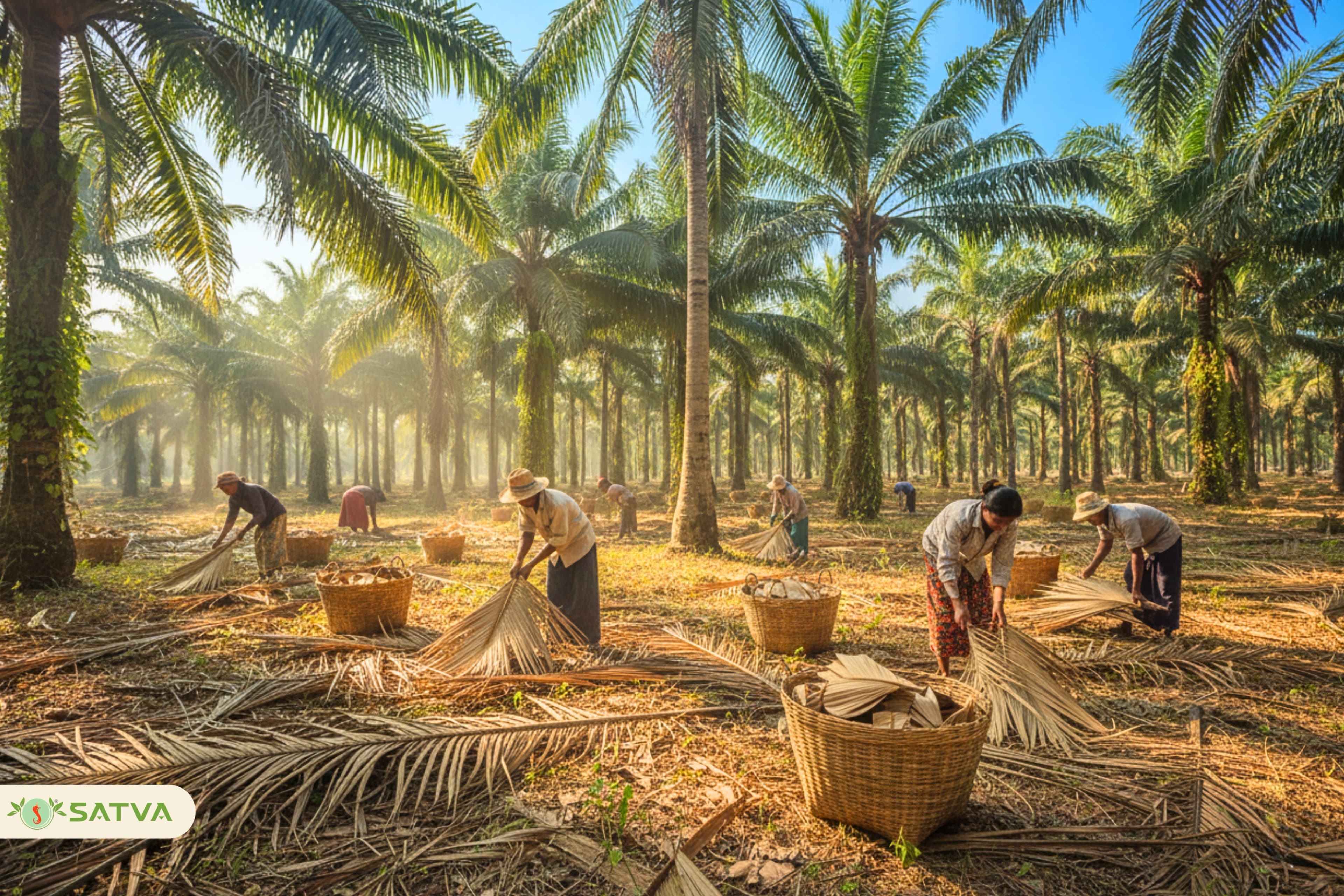
2. Washed
Each leaf is cleaned in water, which also softens it.
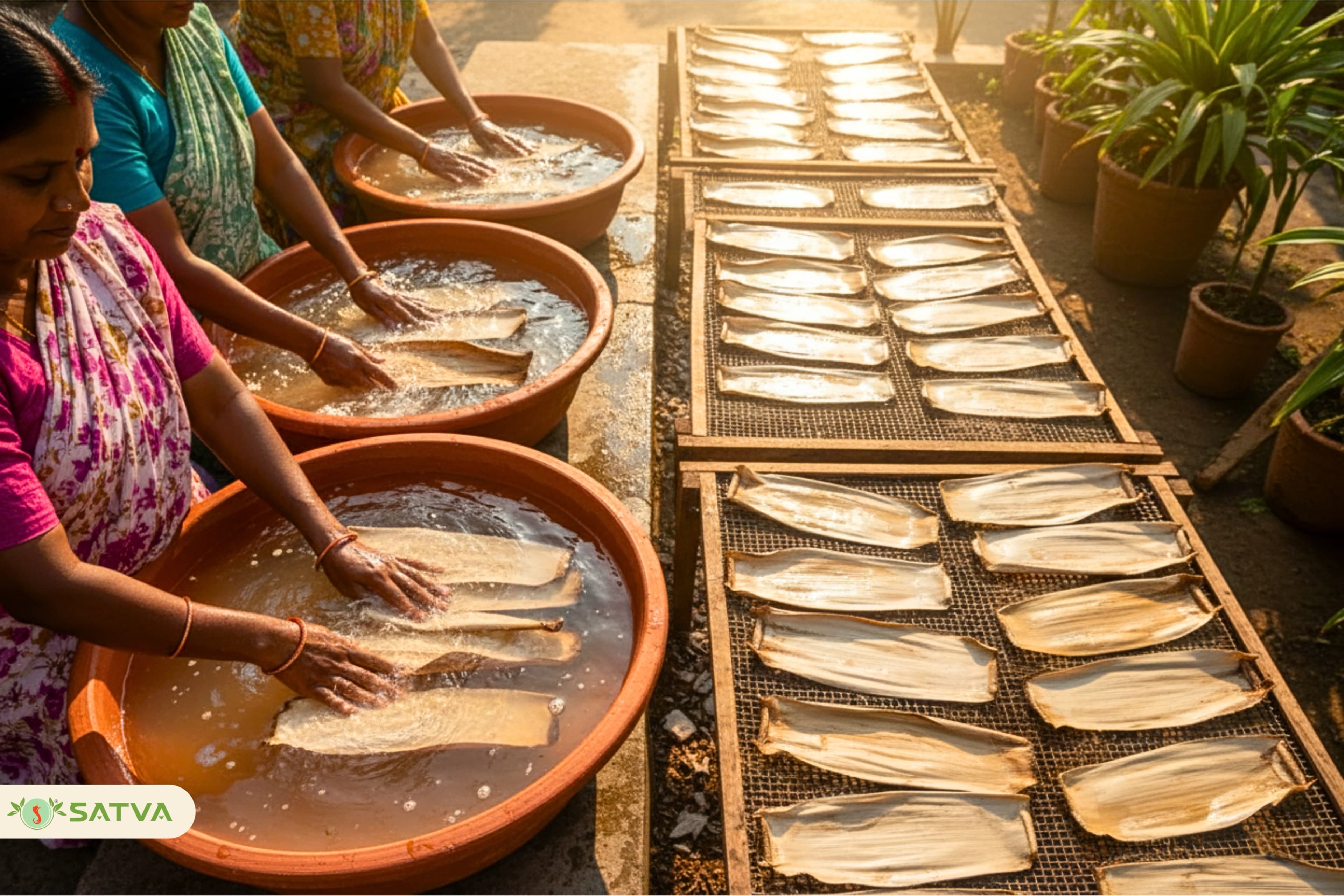
3. Dried
Leaves are dried before and after pressing. Dry leaves don't grow mould.
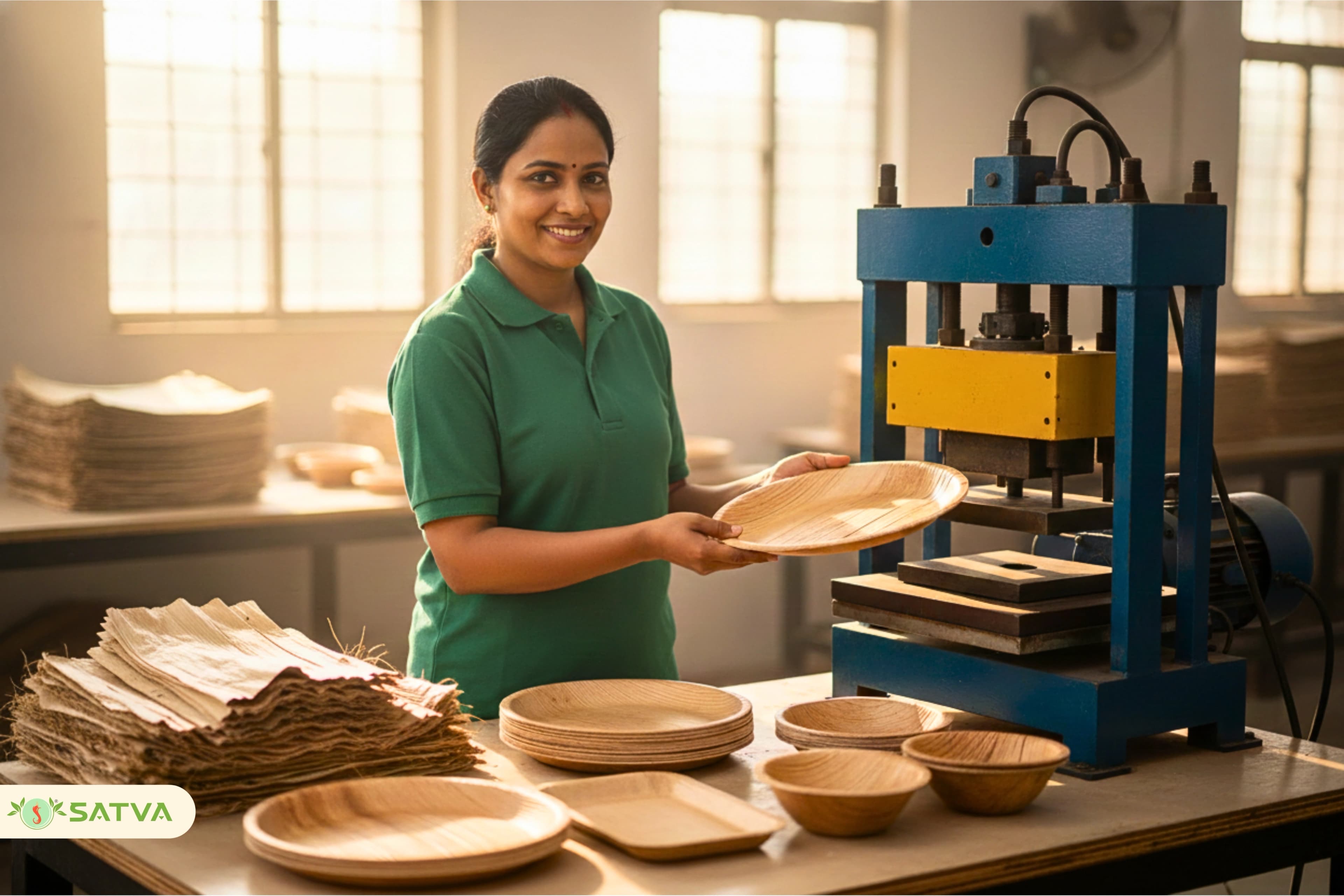
4. Pressed
Heated moulds press each leaf into shape. This is where a flat leaf becomes a square plate or a round bowl.
5. Checked
Edges are trimmed, and every piece is checked for cracks and spots.
6. Packed
Pieces are stacked and sealed against damp and dust.
You can see the same six steps on our how it's made page.
What the process means for buyers
Sizes match, grain differs
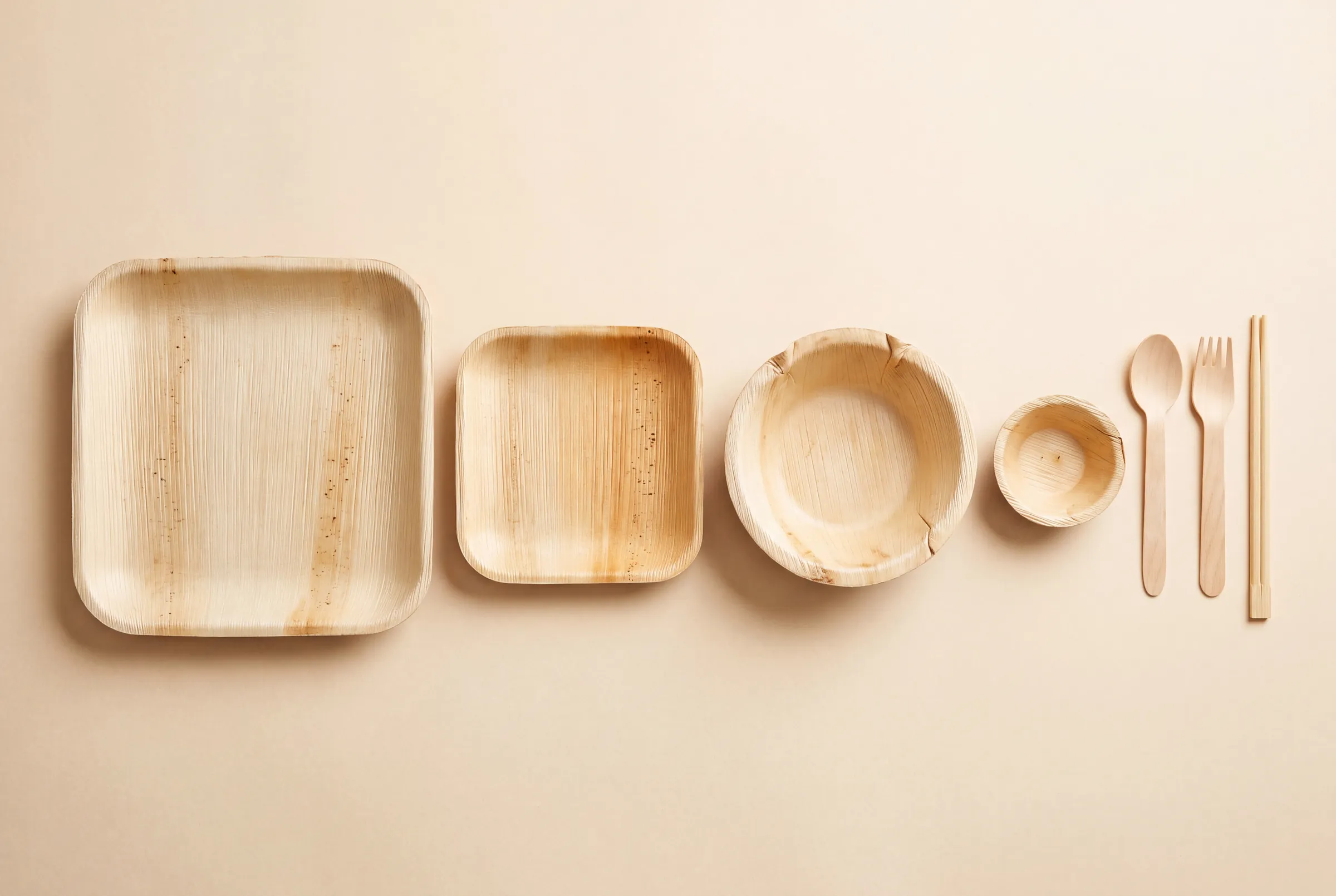
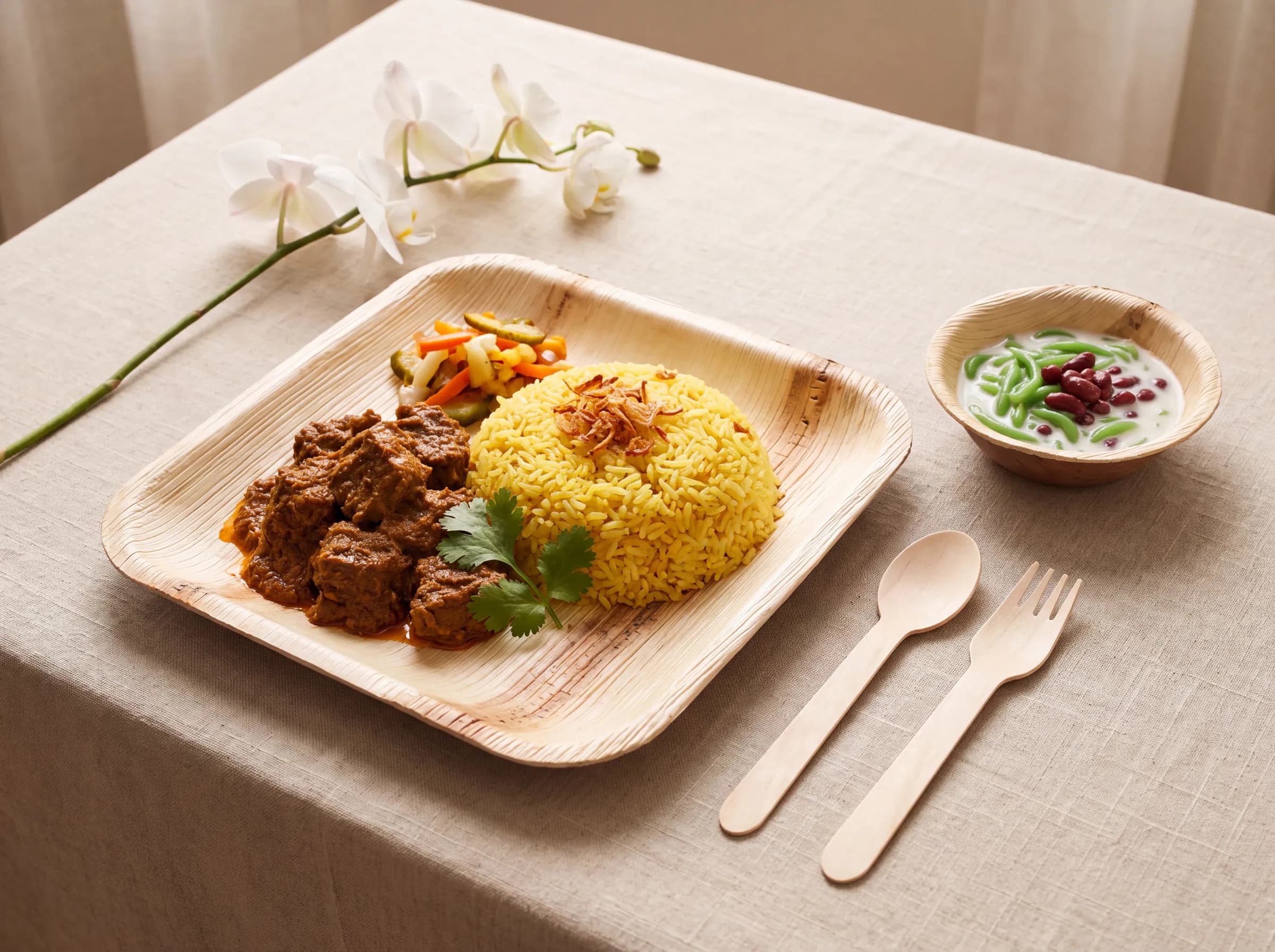
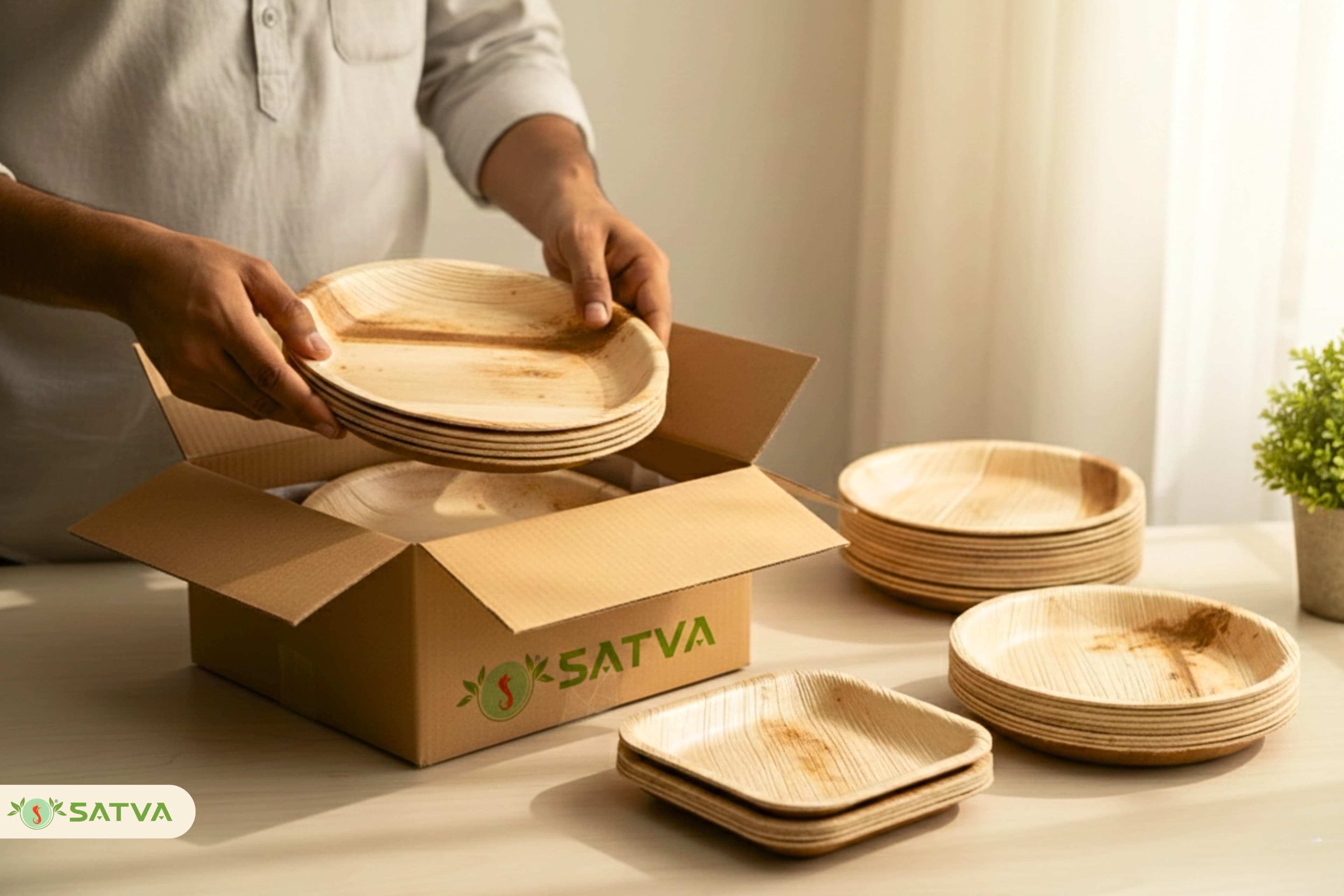
The mould sets the size, so every piece of a size matches. Stacking, portioning and buffet layout stay the same from one carton to the next.
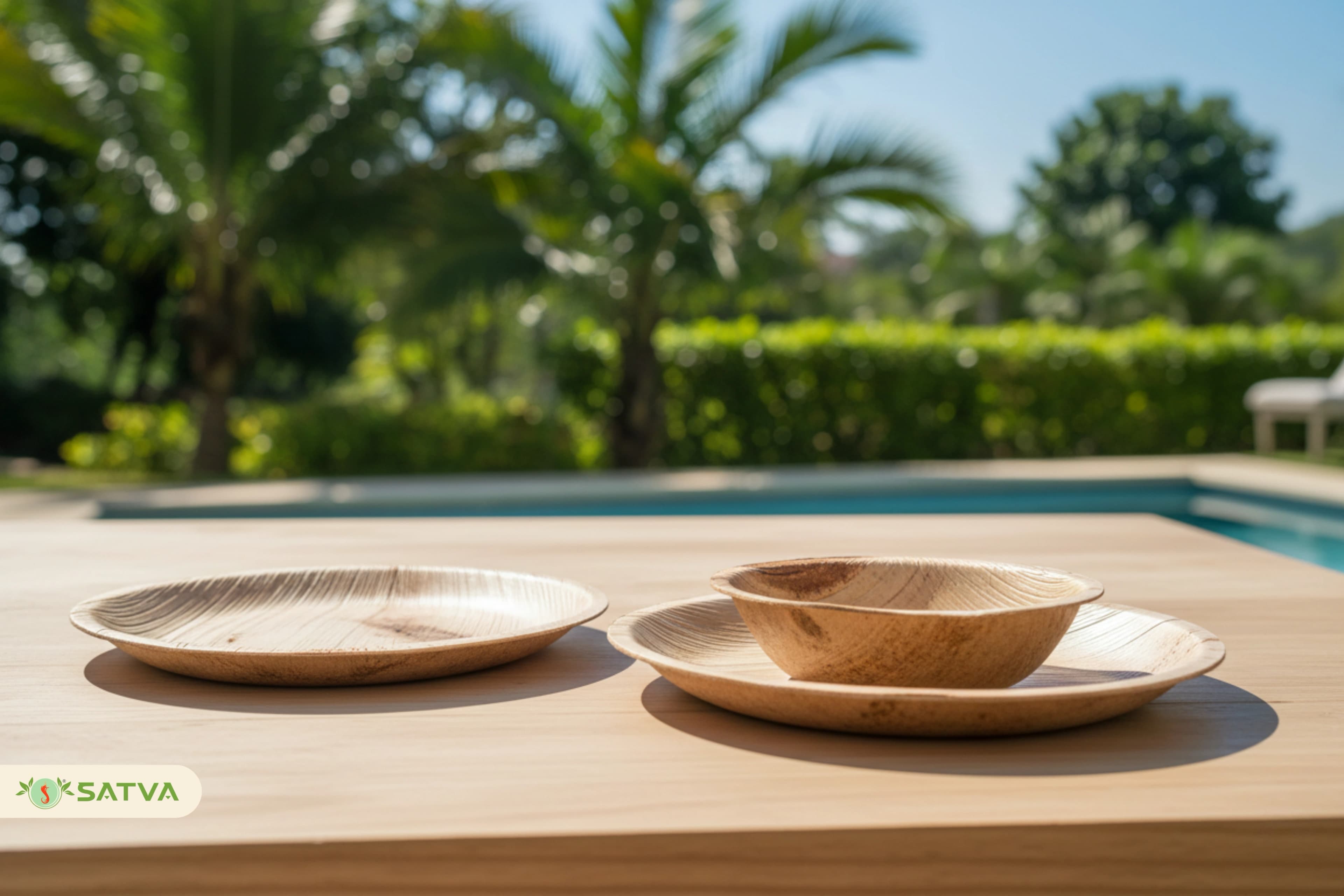
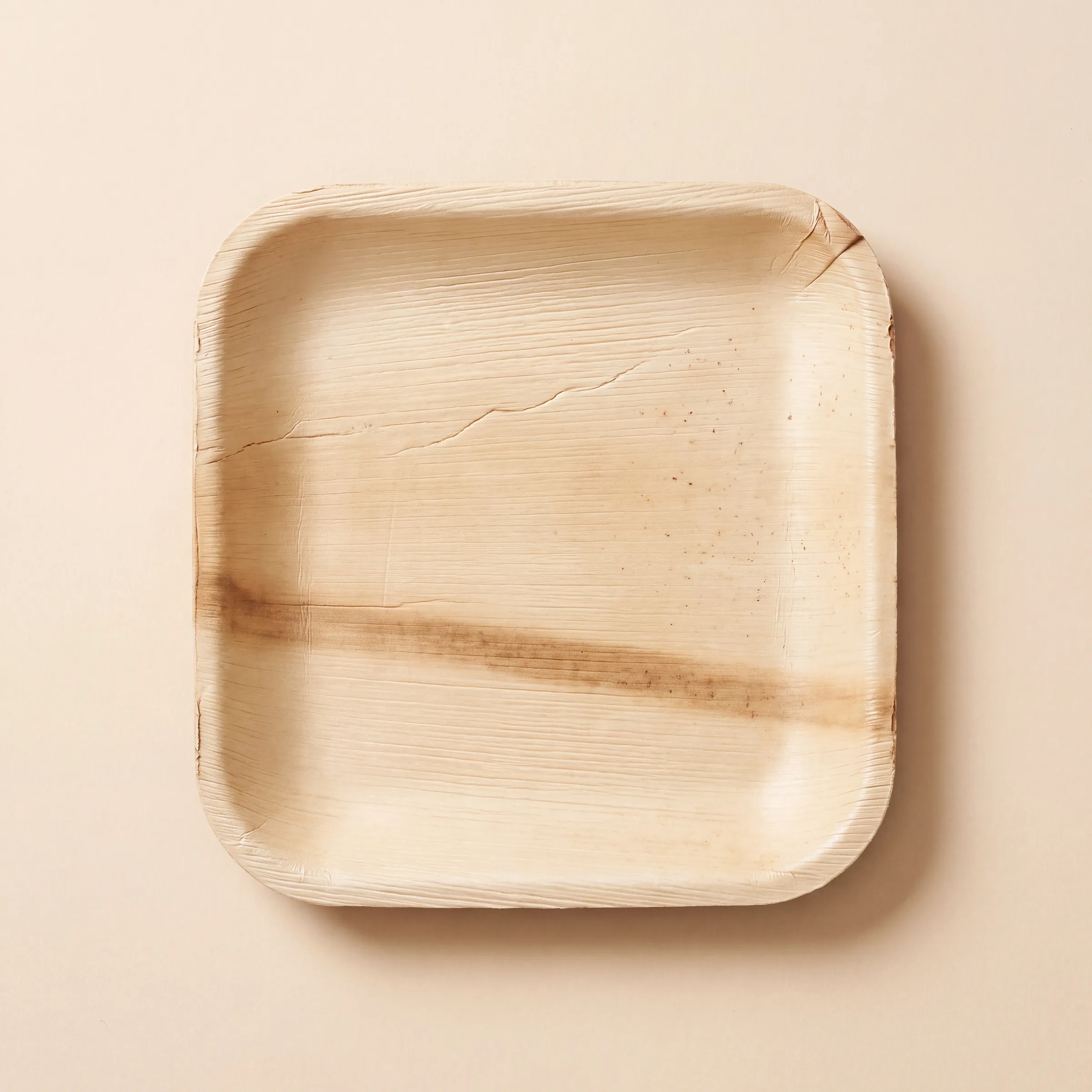
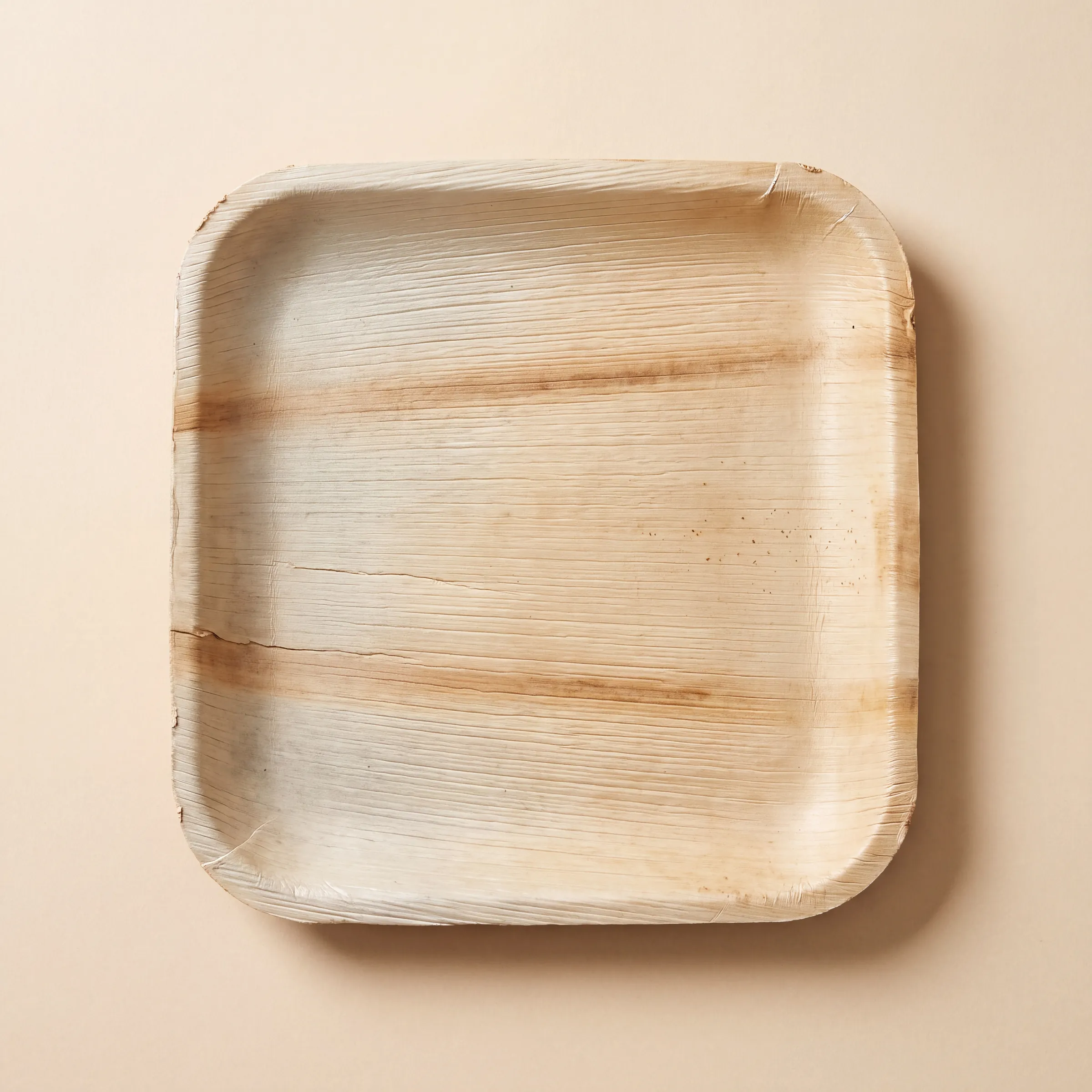
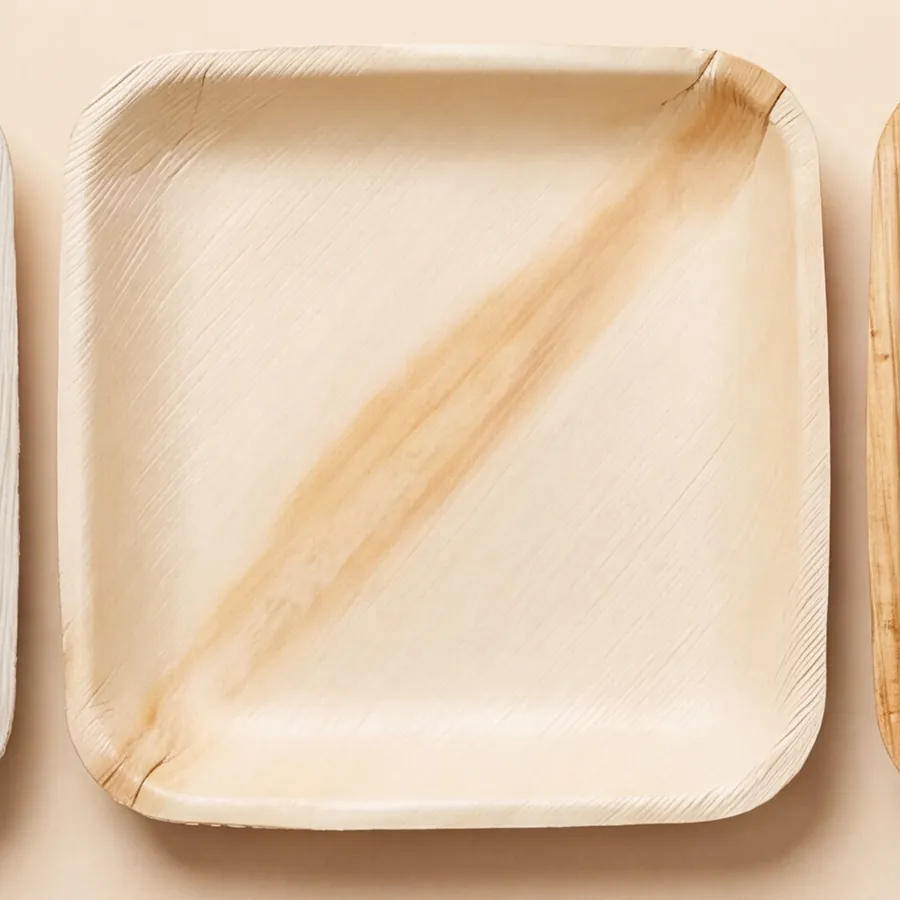
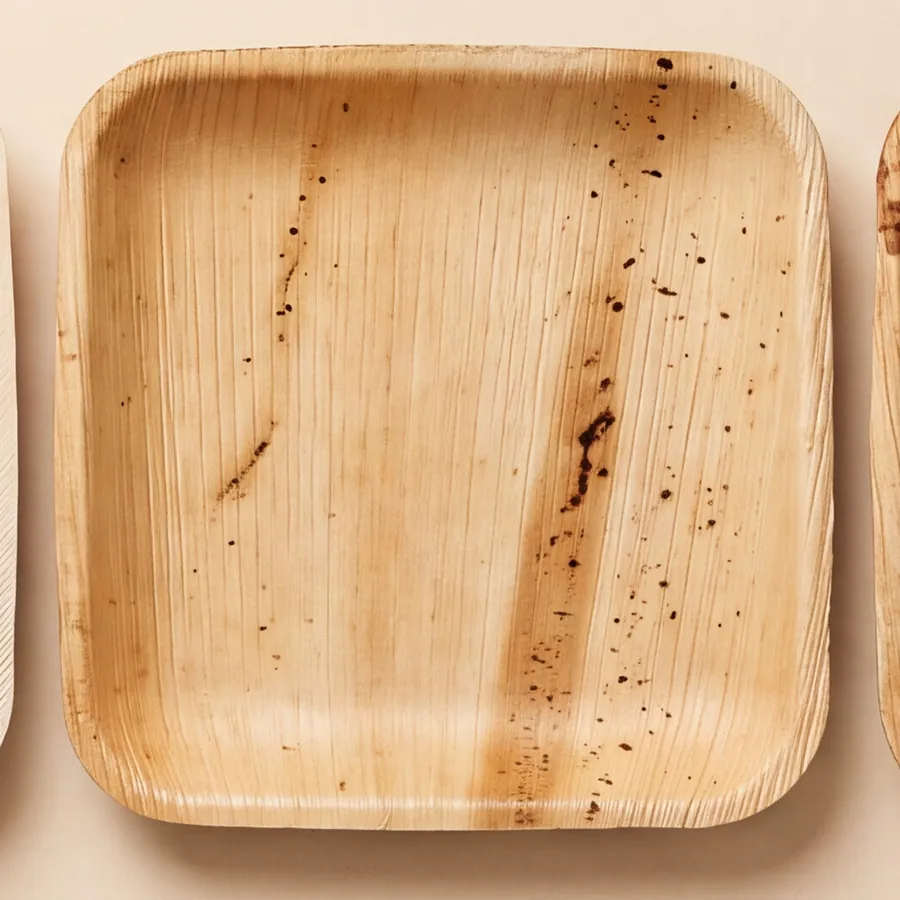
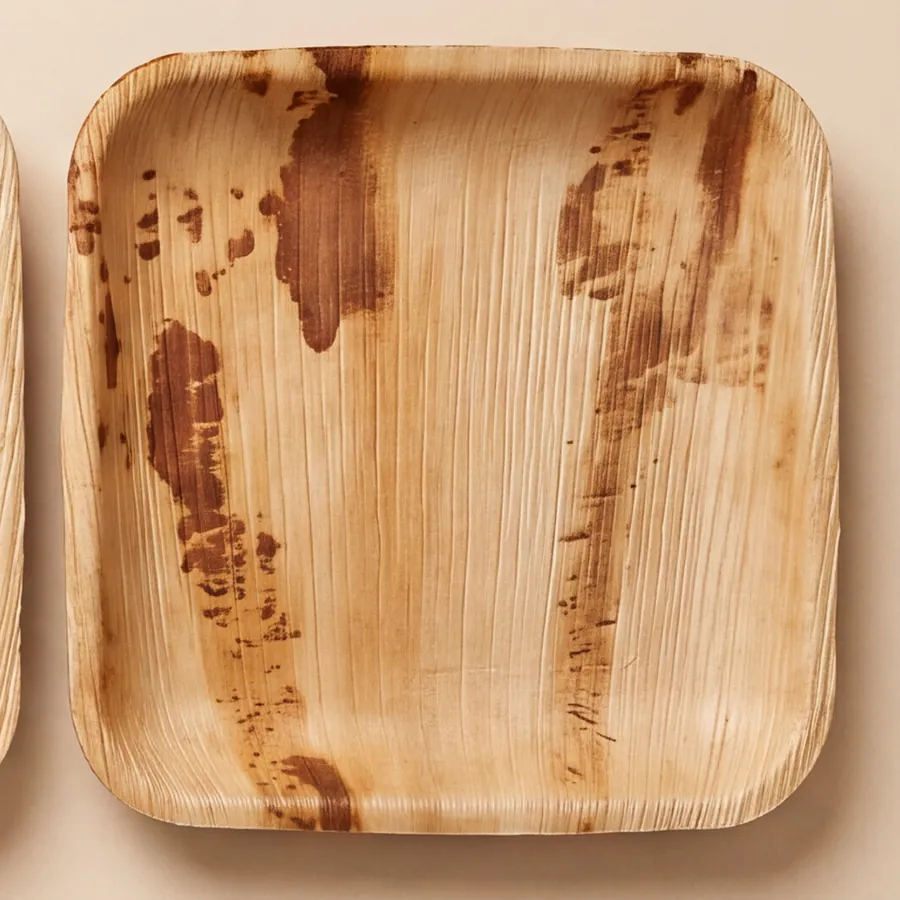
The leaf sets the colour and grain, so every piece looks a little different. On a table, that shows as a set of plates that match in shape but each carry their own pattern.
Holding hot gravy
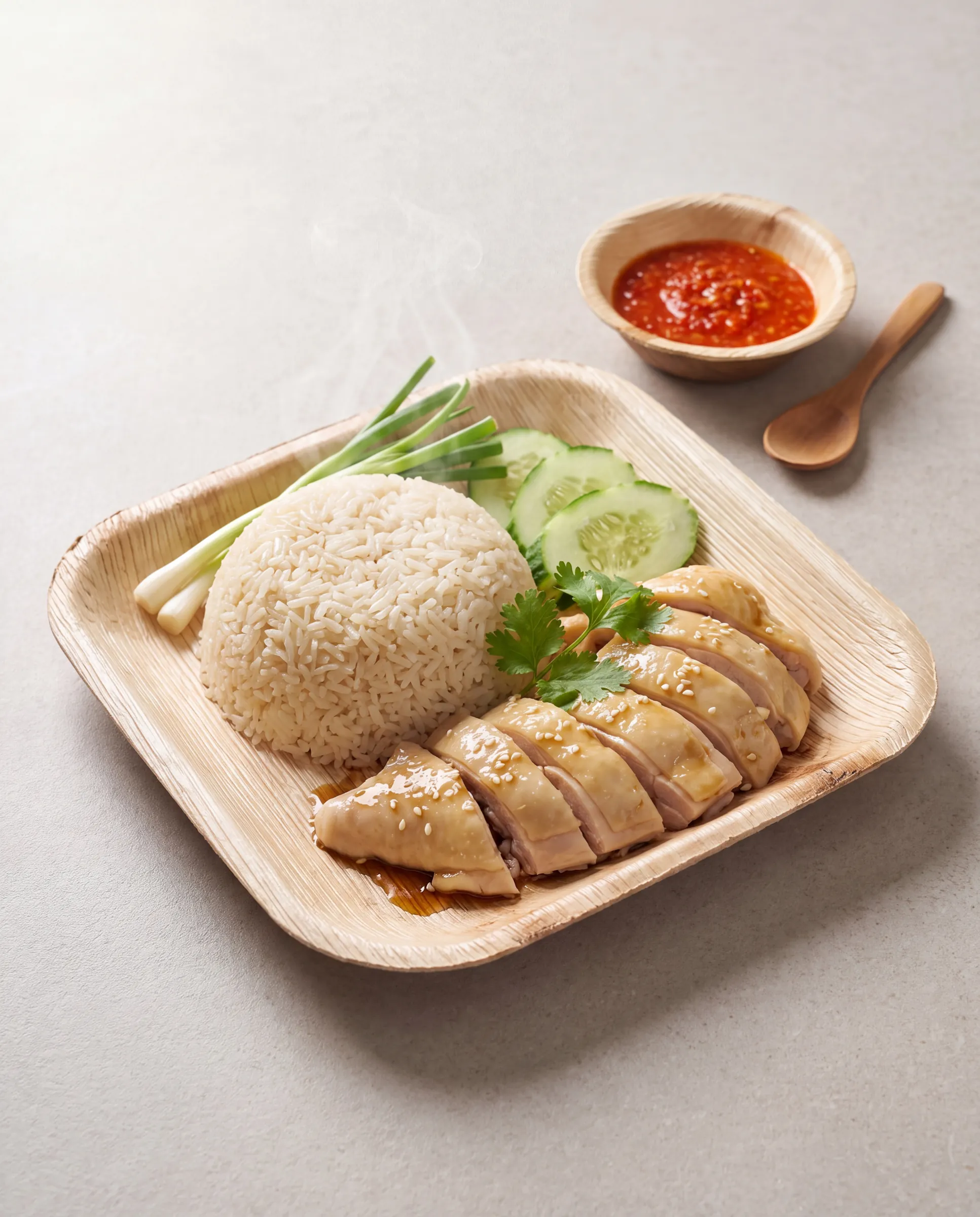
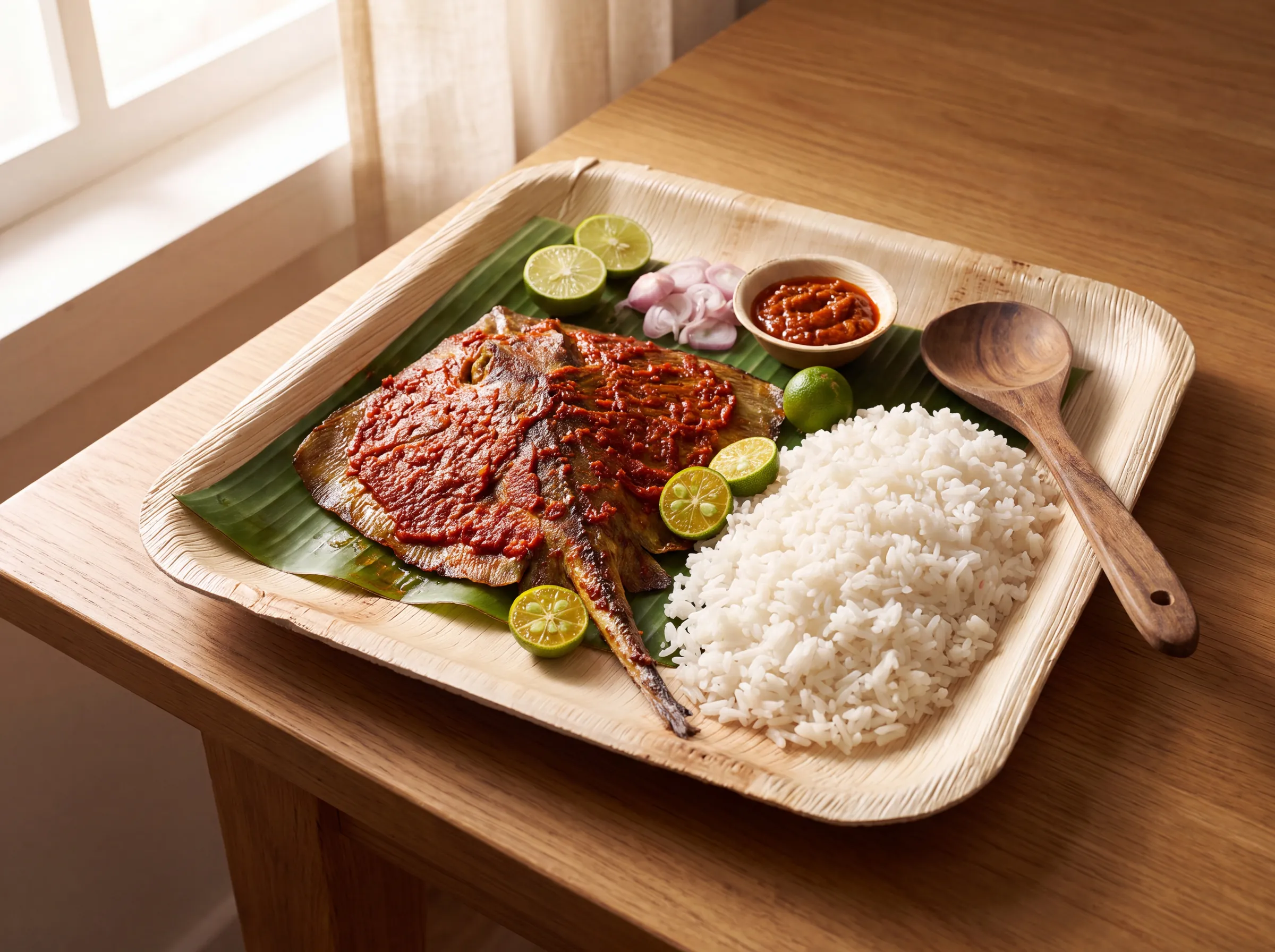
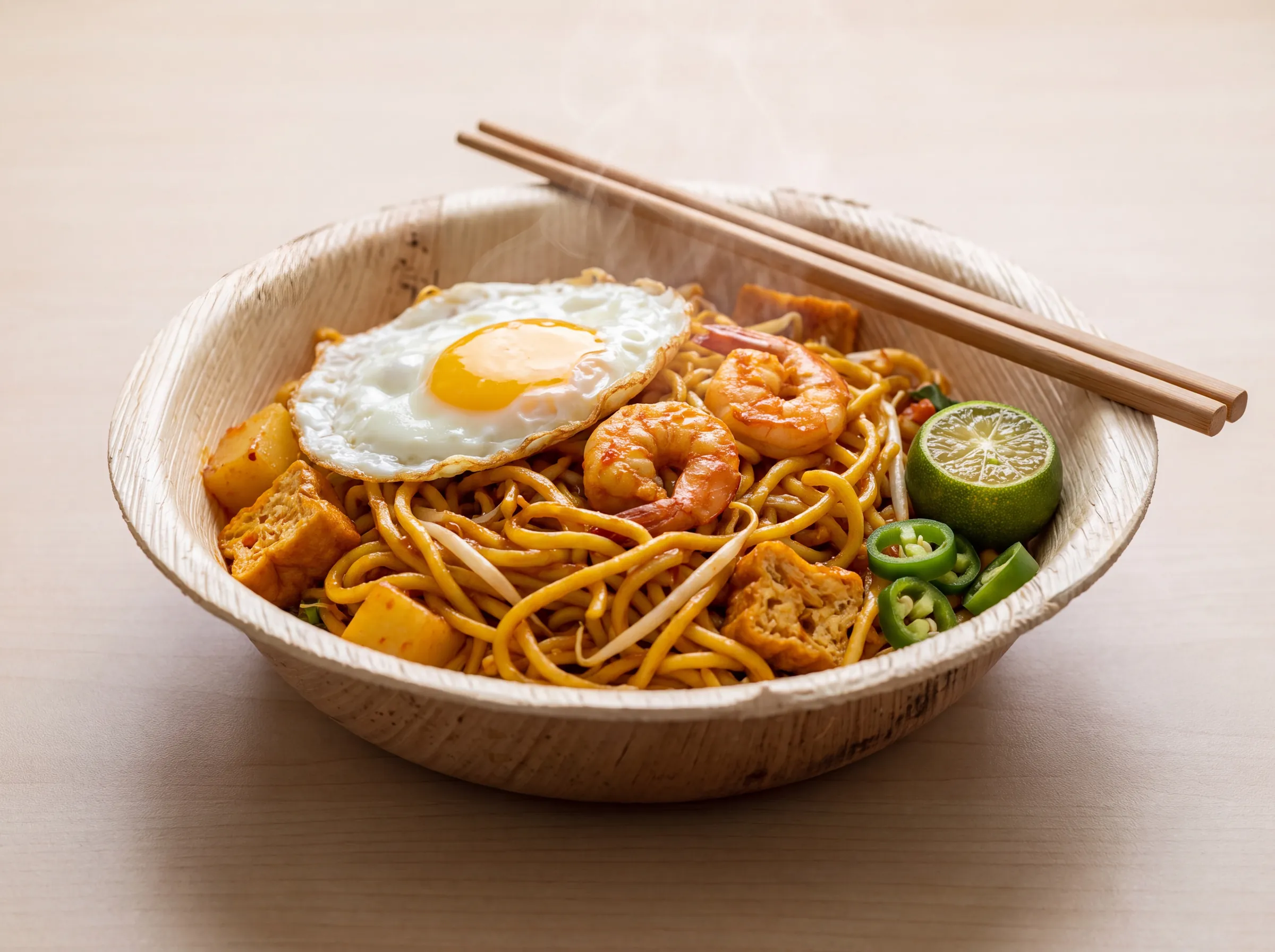
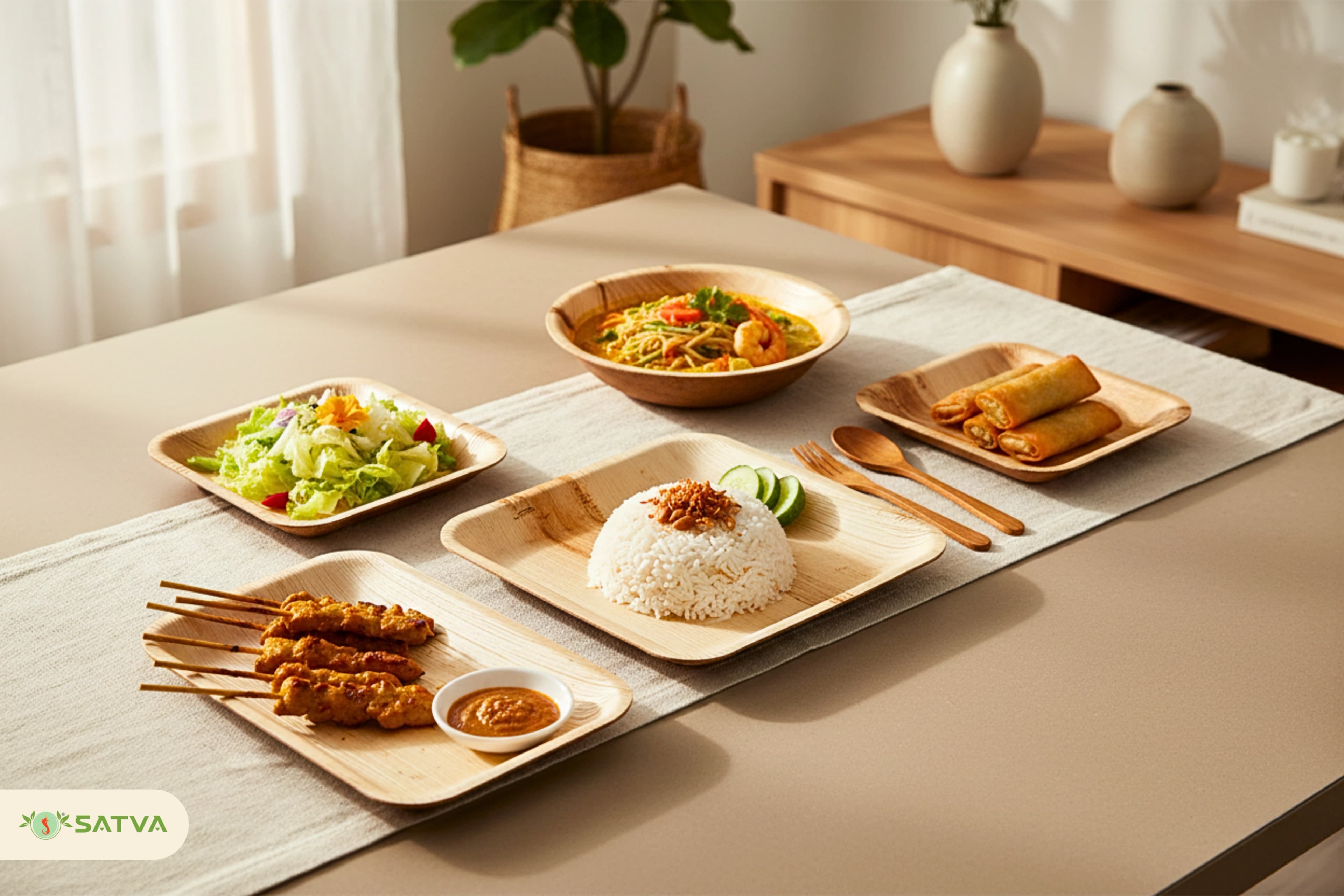
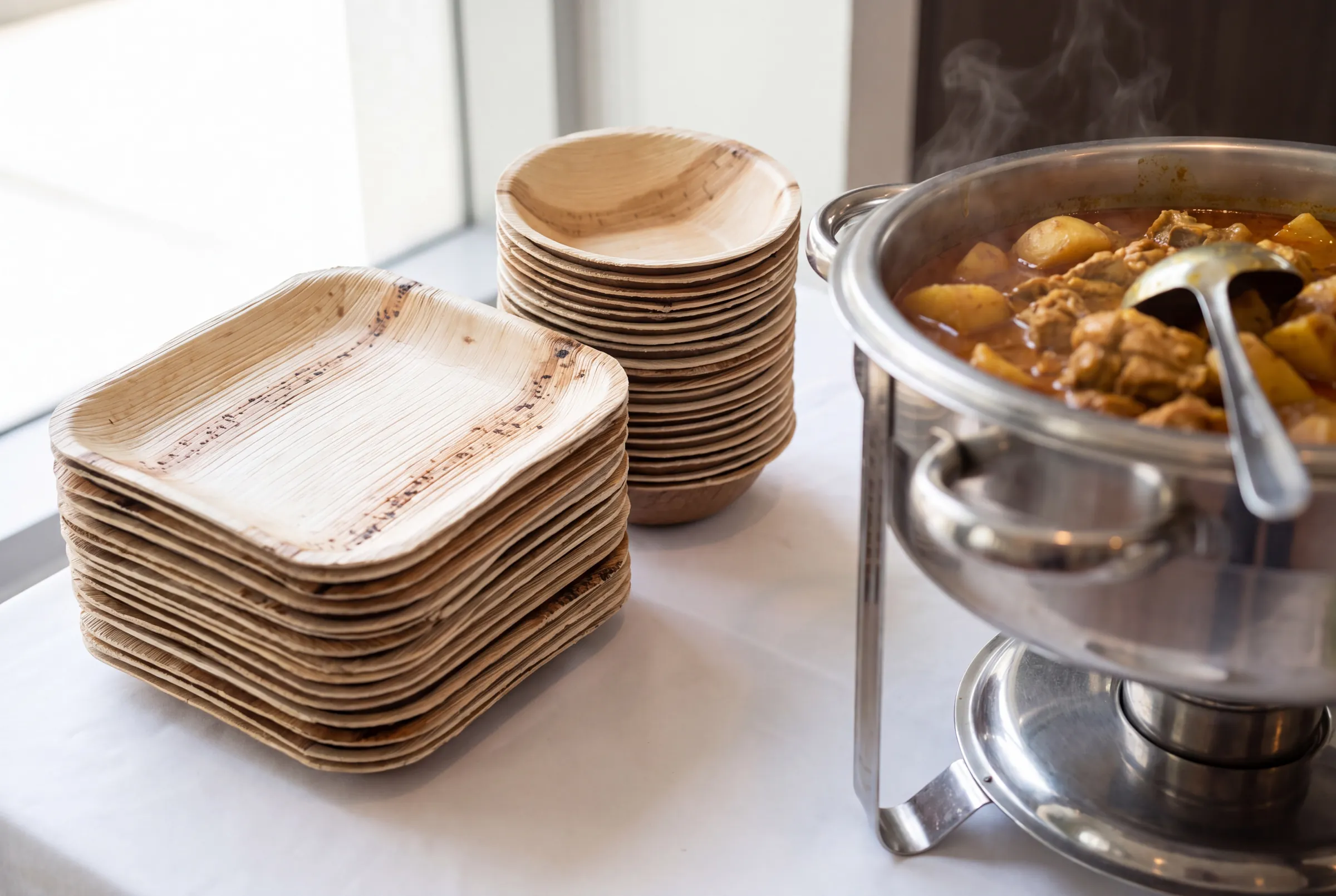
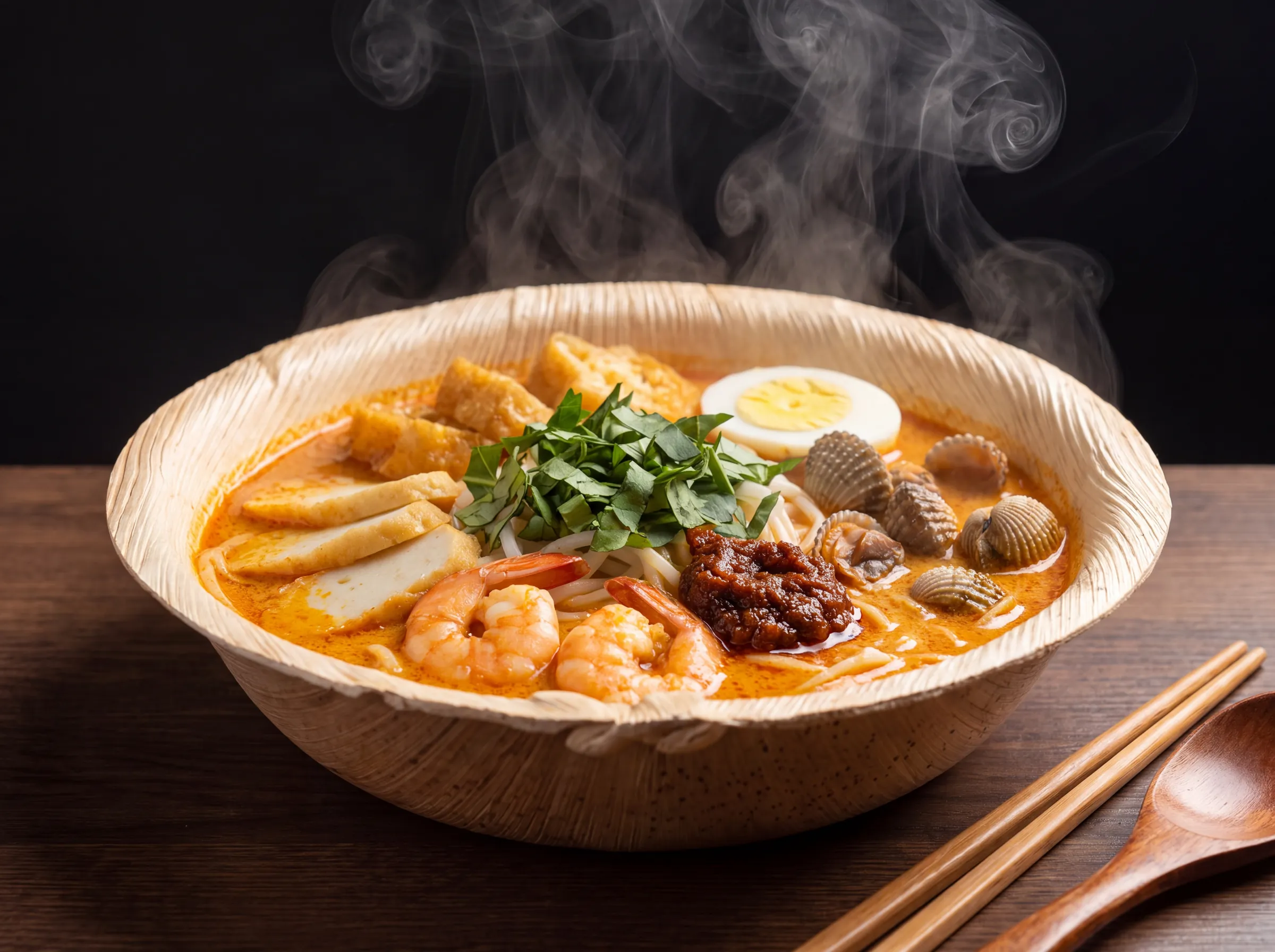
We test every size with hot gravy, and every plate and bowl holds it without leaking. For curries, laksa and noodles, the Big Bowl takes 750 ml and is 2.5 cm deep.
What the lab tested
SGS, an independent lab, found no arsenic, no PCP (a wood preservative) and none of the 70 pesticides tested for. It also found no E. coli, Salmonella or coliform bacteria. The full reports are listed under lab results.
Check it yourself
- SGS India: arsenic, PCP and 70 pesticides, none detectedReports MAN:HL:1548003574 / 3572 · 1648002424 · 2024–25Lab results
- SGS India: microwave, 5 × 60 s at about 650 W, no visible changeReport MAN:HL:1248000747Lab results
- ISO 9001:2015 certified manufacturing partnerCertificate 3050240620104QLab results
These results apply to the areca leaf plates and bowls. Satva's spoons, forks and chopsticks are wooden and are not covered by these tests.
Using a microwave
Use short bursts. In SGS testing the plates showed no change after five one-minute rounds with oily food. Not for the oven.
Storing stock in Singapore's humidity
The leaves are dried and the pieces sealed before they leave the factory. Keeping them that way is down to storage:
- Keep cartons in a cool, dry room, off the floor.
- Keep pieces wrapped until use.
- Use older stock first.
Send us your menu and headcount
We suggest the pieces and quantities, and reply with a quote and a delivery date.
After use
Areca leaf is a plant. Like any fallen leaf, it breaks down in compost. If there's no compost collection, put it in general waste.
Frequently asked questions
Is any tree cut to make Satva plates?
No. Areca trees drop their leaves several times a year. Farmers pick up the fallen ones, so no tree is cut.
Why does each plate look a little different?
The mould sets the size, so every piece of a size matches. The leaf sets the colour and grain, so every piece looks a little different.
Can the plates and bowls hold hot, oily food?
We test every size with hot gravy, and every plate and bowl holds it without leaking.
Can I microwave Satva plates?
Use short bursts. In SGS testing the plates showed no change after five one-minute rounds with oily food. Not for the oven.
How should I store cartons in Singapore's humidity?
Keep cartons in a cool, dry room, off the floor. Keep pieces wrapped until use, and use older stock first.