Key takeaways
- Areca leaf plates are pressed from fallen areca leaves. Plastic plates are made from oil.
- Areca, bagasse and plastic all hold hot gravy. PLA depends on the product.
- Areca costs more per piece. For high-volume takeaway, bagasse is usually the better buy.
- Areca is worth it when the table is part of the event: weddings, banquets and plated menus.
If you run events, a café or a catering kitchen in Singapore, you go through a lot of disposable plates. Plastic is the default because it costs little and it works. This guide sets out how areca leaf plates compare with plastic, and briefly with bagasse (sugarcane fibre) and cornstarch or PLA, so you can decide which suits each job.
Some context first. According to the National Environment Agency, Singapore throws away about 200,000 tonnes of disposables a year, and Semakau Landfill is expected to be full by 2035. What you put on the table ends up somewhere, so it is worth knowing where.
The comparison at a glance
| Areca leaf | Bagasse (sugarcane fibre) | Cornstarch / PLA | Plastic | |
|---|---|---|---|---|
| Made from | One fallen areca leaf | Sugarcane pulp | Plant starch made into bioplastic | Oil |
| Looks like | Leaf grain, cream to tan, every piece different | Plain white or beige | Plain and smooth | Plain and smooth |
| Hot gravy | Holds it, every size tested | Holds it | Depends on the product | Holds it |
| After use | Breaks down in compost like a leaf | Composts, often only in industrial facilities | Needs industrial composting | Burnt or buried |
| Cost per piece | Higher | Lowest | Low | Low |
There is a longer version of this table on our Why Satva page.
What each plate is made from
Plastic plates are made from oil. Bagasse is pulp left over from sugarcane. PLA is plant starch turned into a bioplastic.
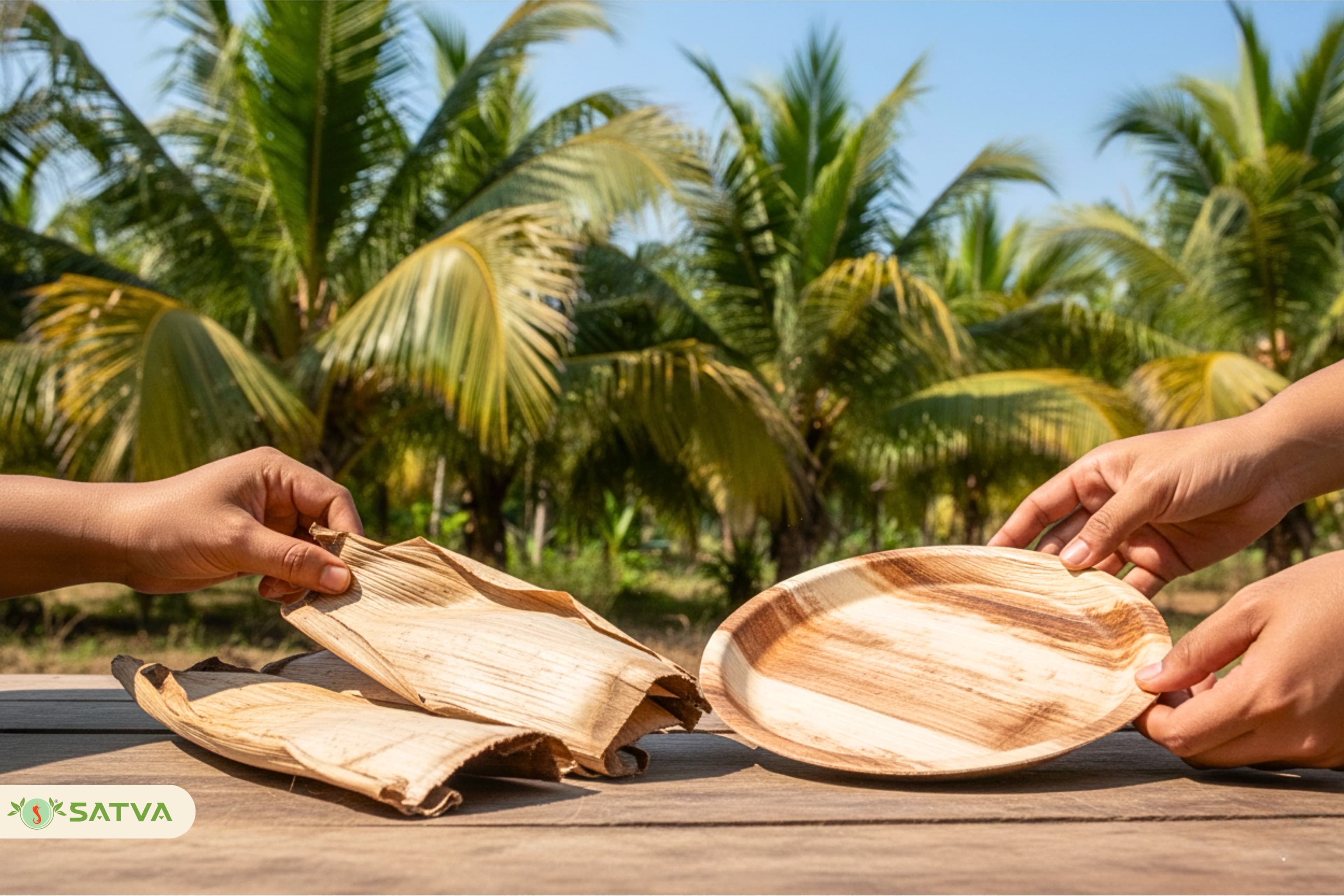
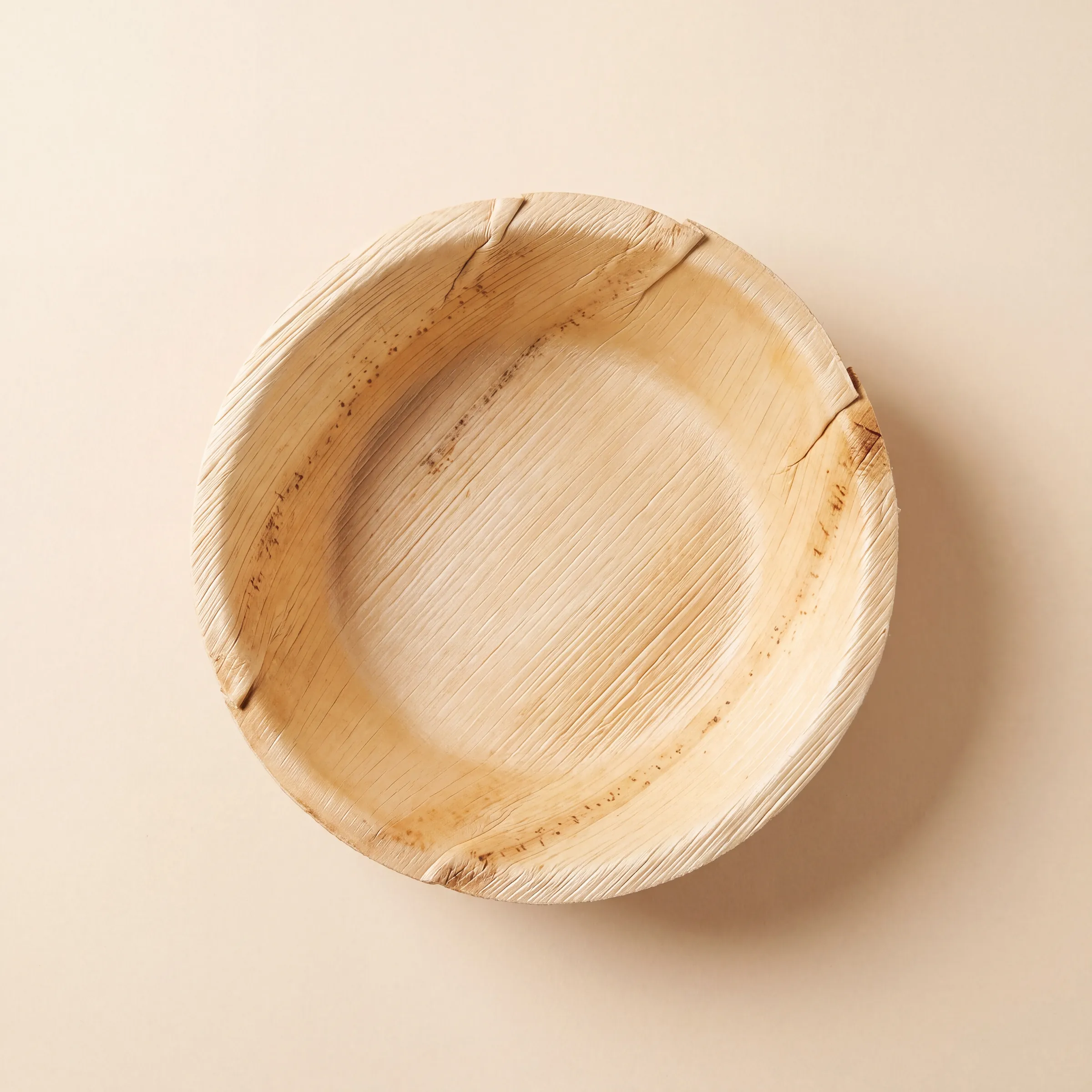
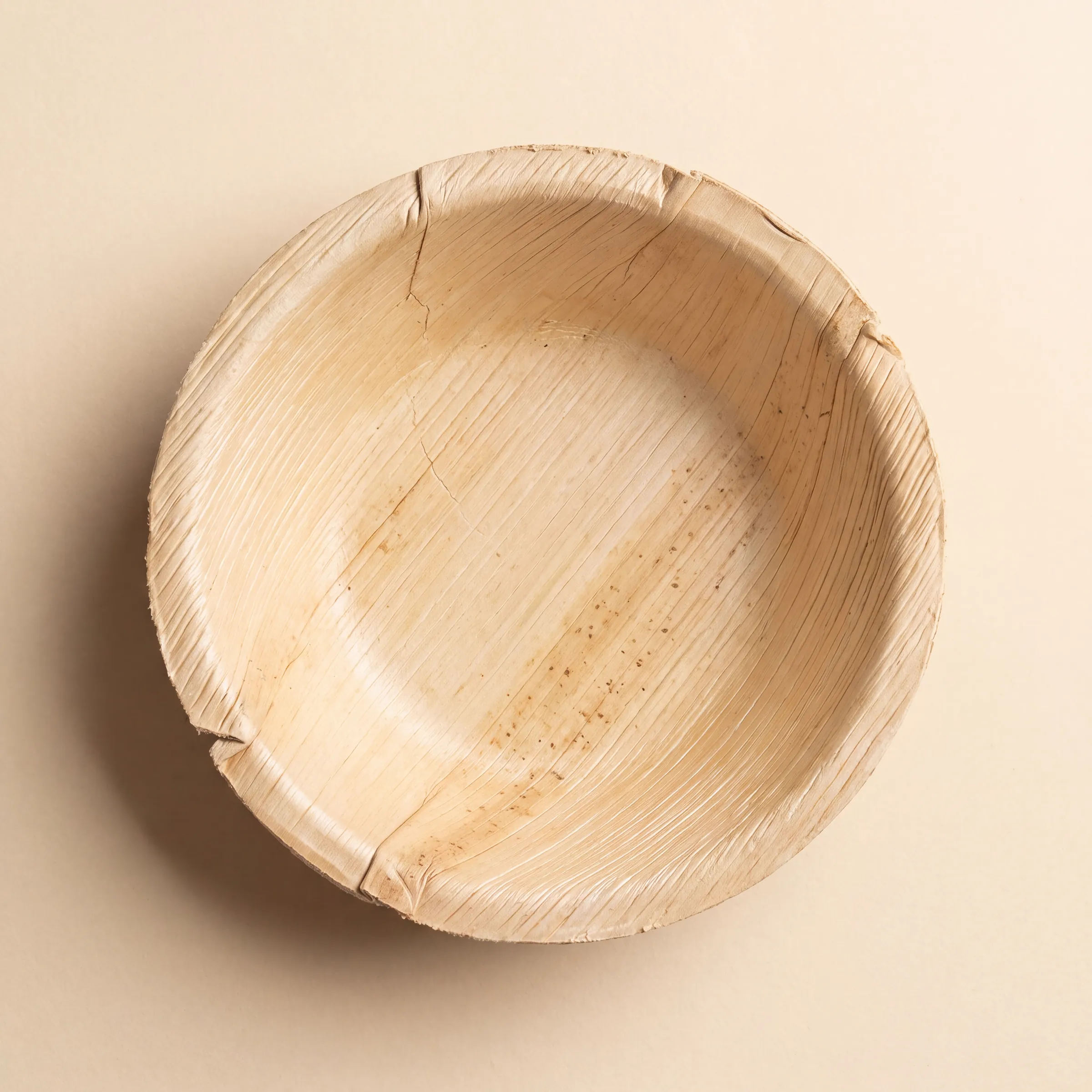
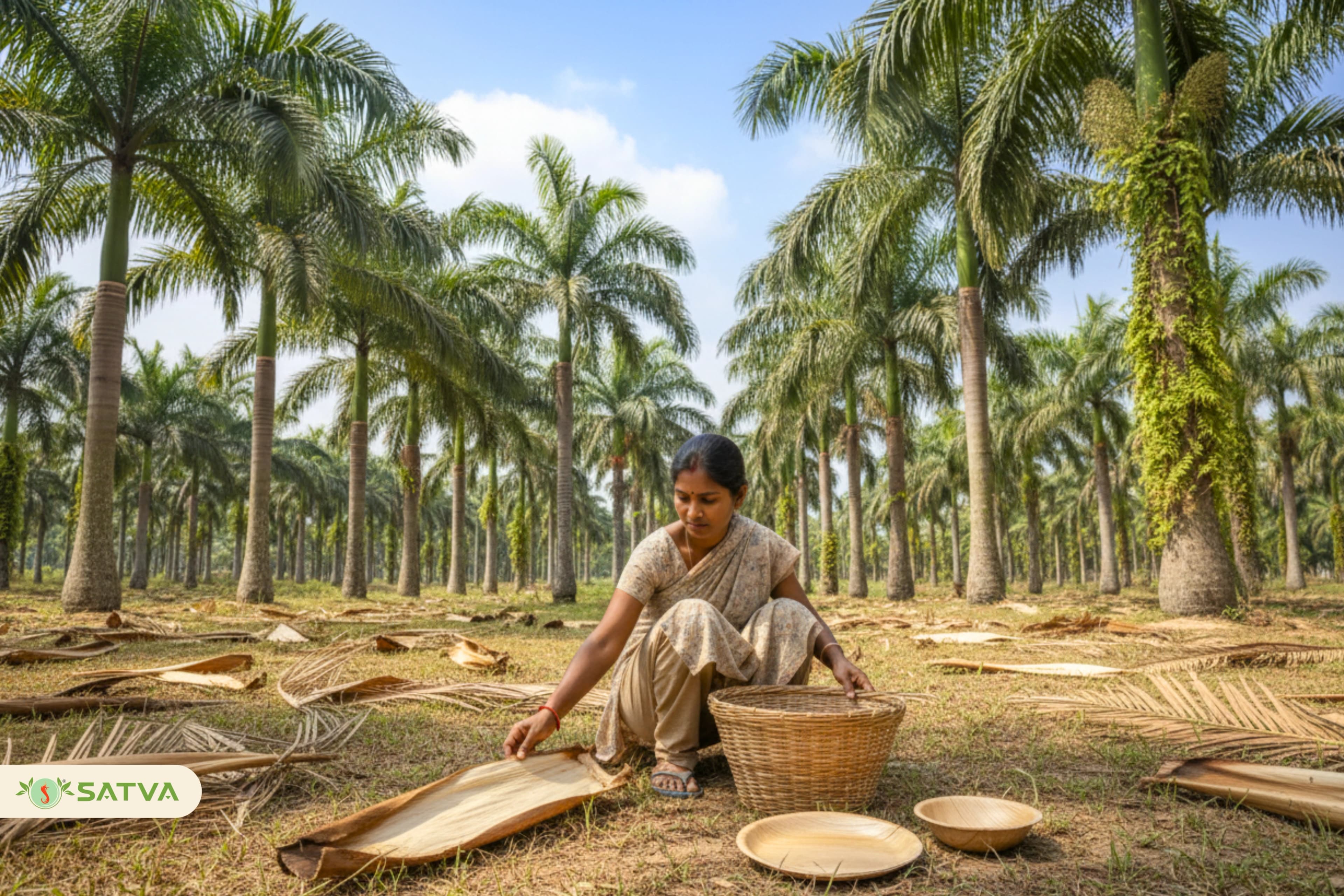
An areca leaf plate is one fallen areca leaf, pressed into shape. Areca trees drop their leaves several times a year. Farmers pick up the fallen ones, so no tree is cut.
Hot food
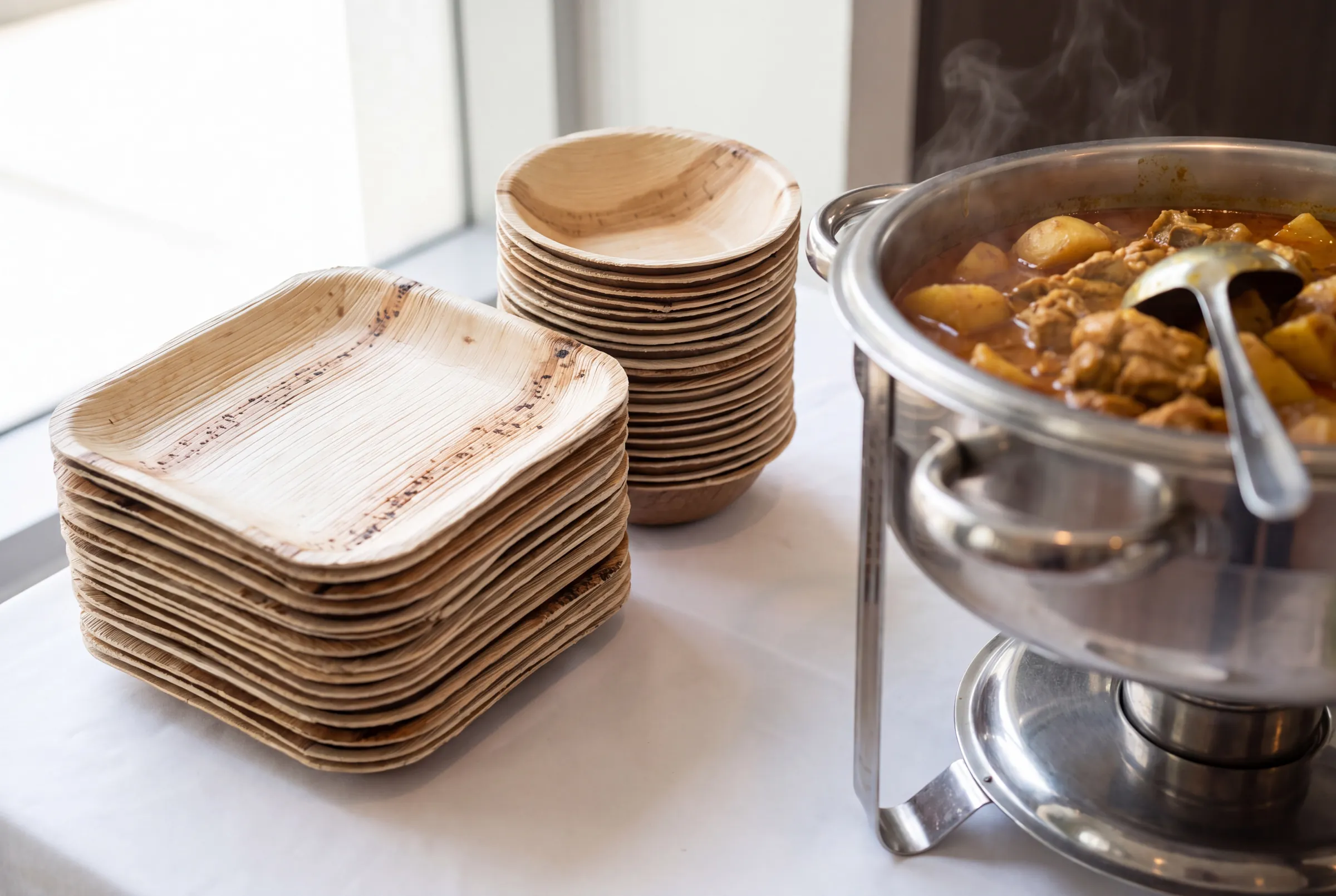
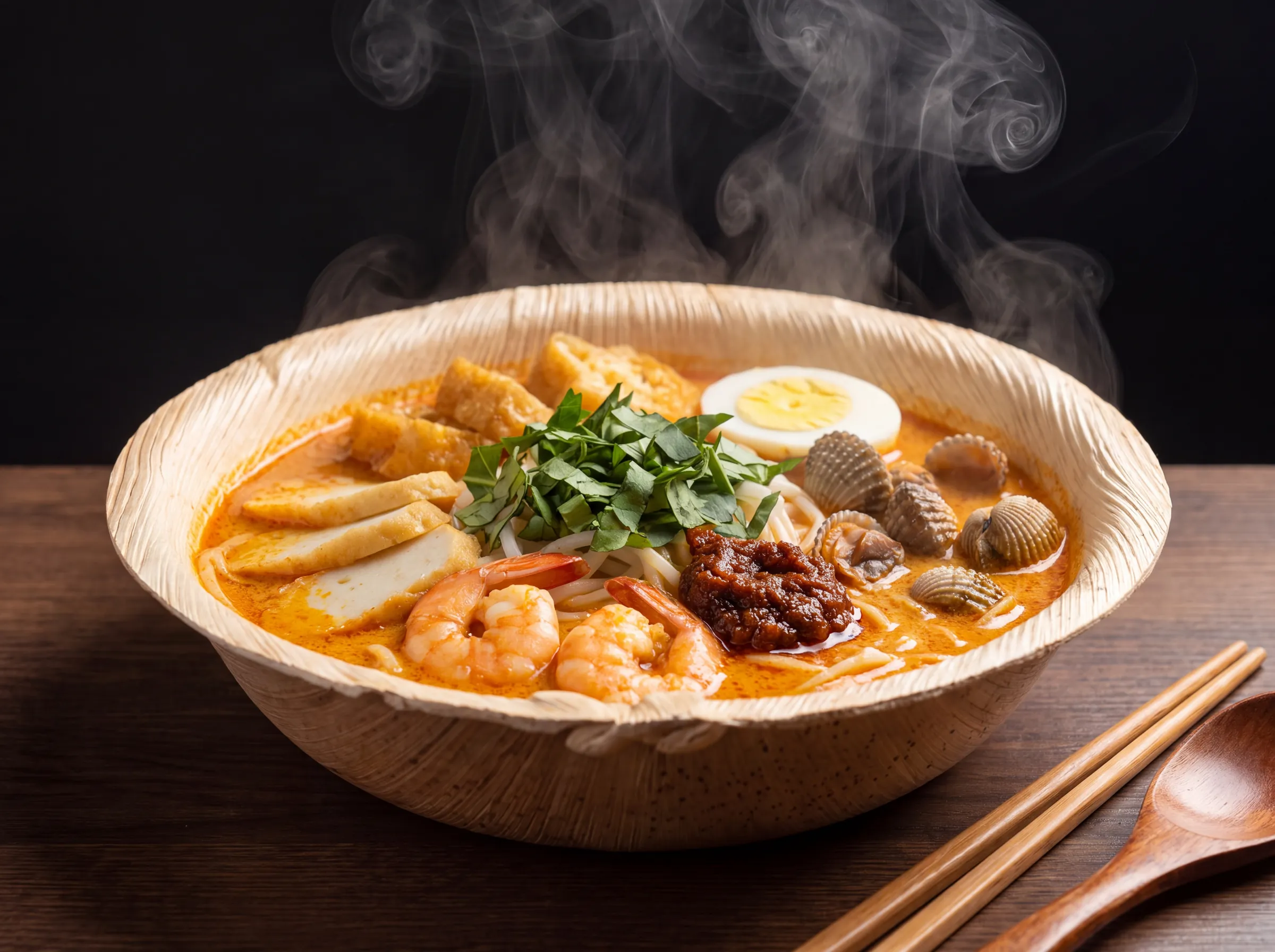
Singapore menus lean on gravy: curry, laksa, braised dishes, sambal. A plate that softens or seeps under hot sauce is no use at a buffet.
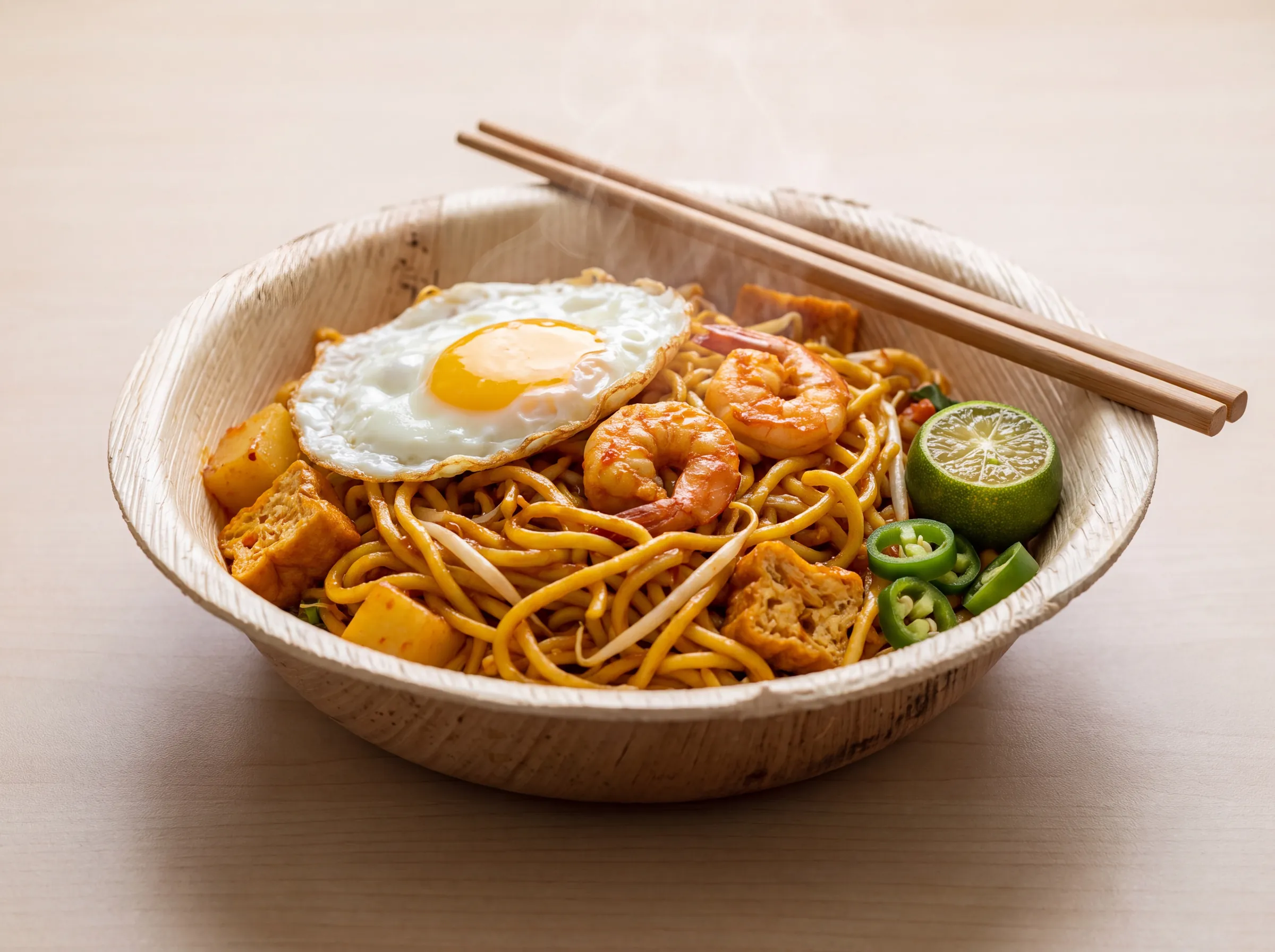
Plastic and bagasse both hold hot gravy. PLA depends on the product, so check the maker's figures before you serve anything hot on it. For areca, we test every size with hot gravy, and every plate and bowl holds it without leaking.
If you need to reheat, use short bursts in the microwave. In SGS testing the plates showed no change after five one-minute rounds with oily food. Not for the oven.
What is in the plate
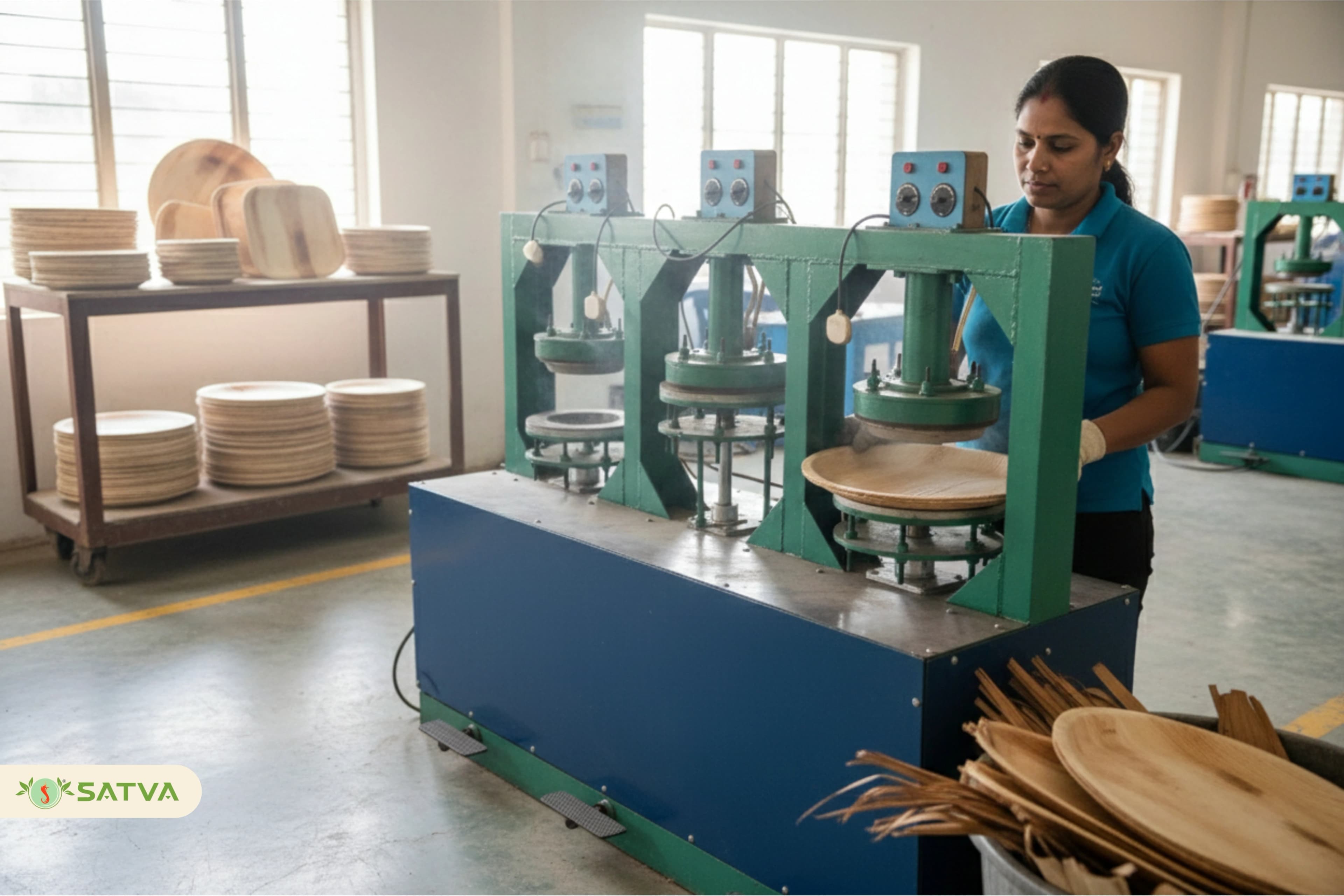
SGS, an independent lab, found no arsenic, no PCP (a wood preservative) and none of the 70 pesticides tested for. It also found no E. coli, Salmonella or coliform bacteria. The plates are made in an ISO 9001 certified factory. The full results are on our lab testing page.
Check it yourself
- SGS India: arsenic, PCP and 70 pesticides, none detectedReports MAN:HL:1548003574 / 3572 · 1648002424 · 2024–25Lab results
- SGS India: microwave, 5 × 60 s at about 650 W, no visible changeReport MAN:HL:1248000747Lab results
- ISO 9001:2015 certified manufacturing partnerCertificate 3050240620104QLab results
How it looks on the table
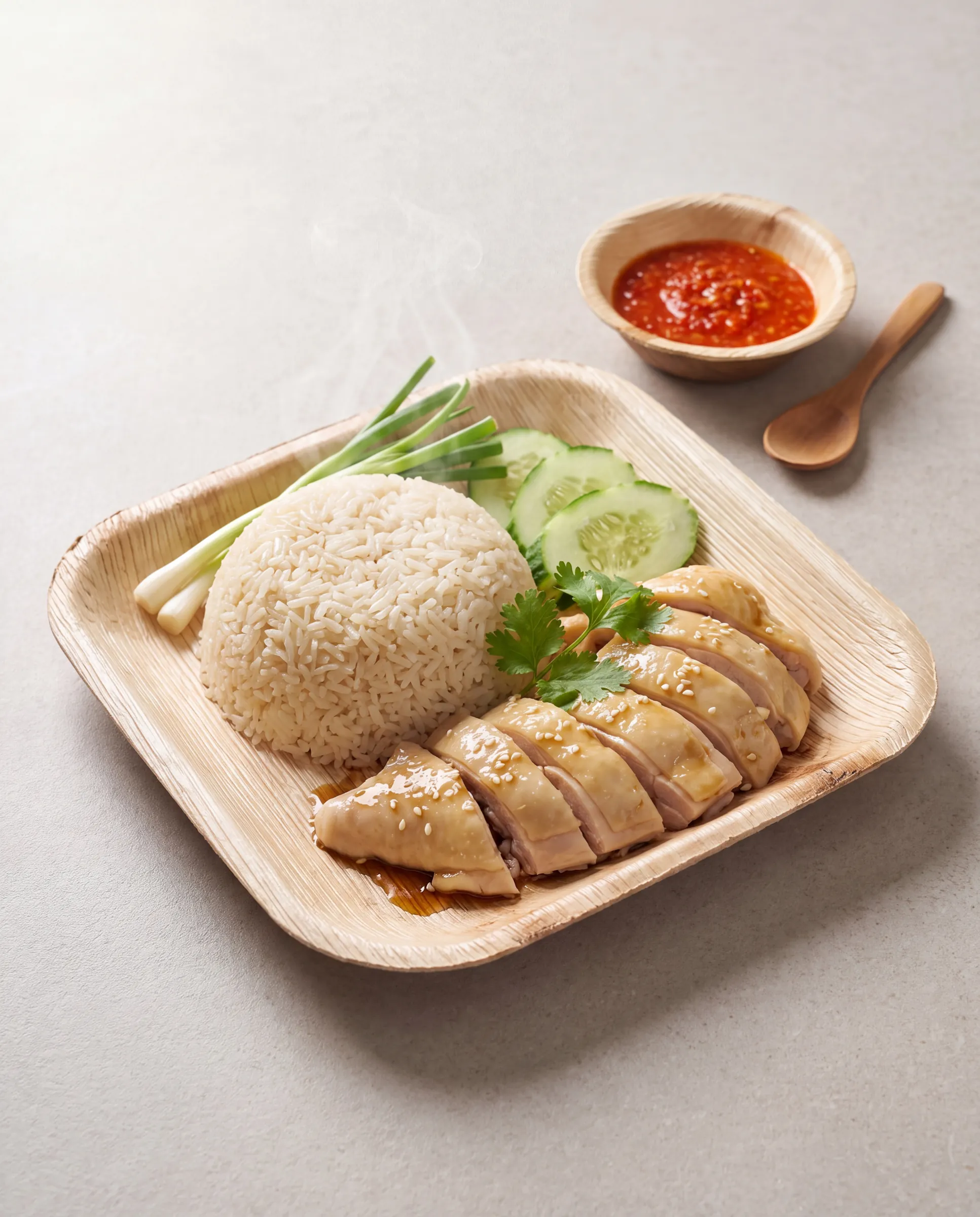
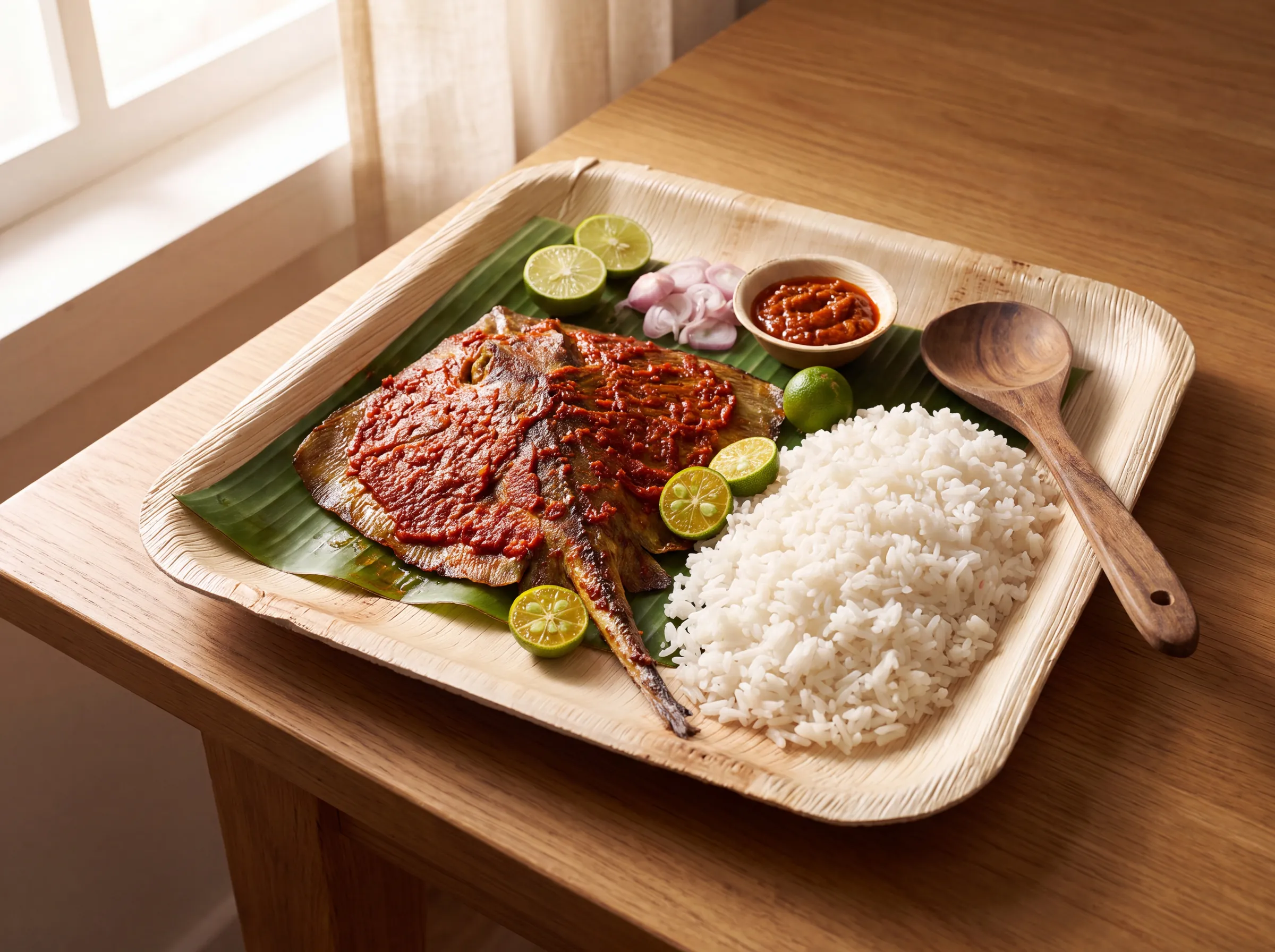
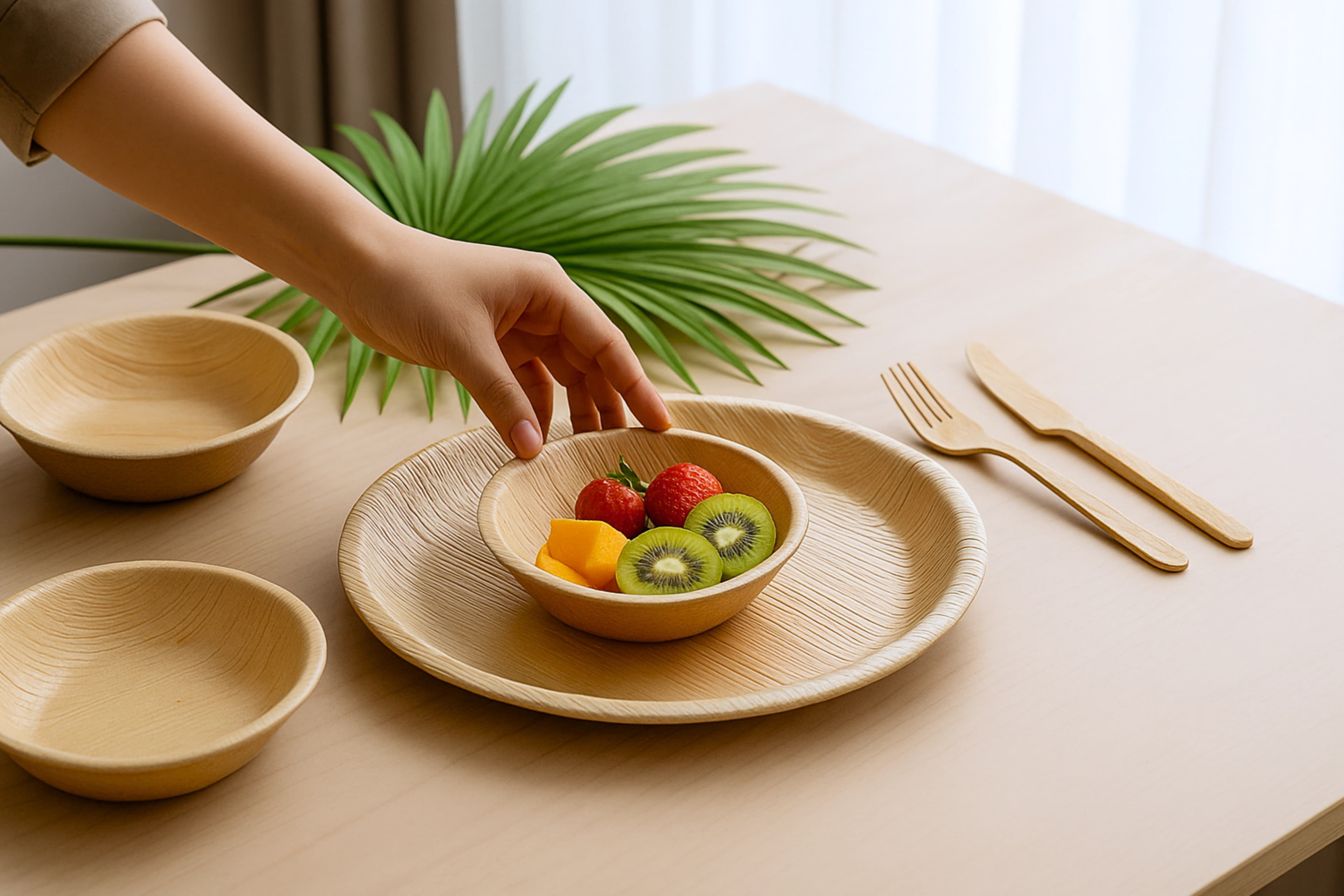
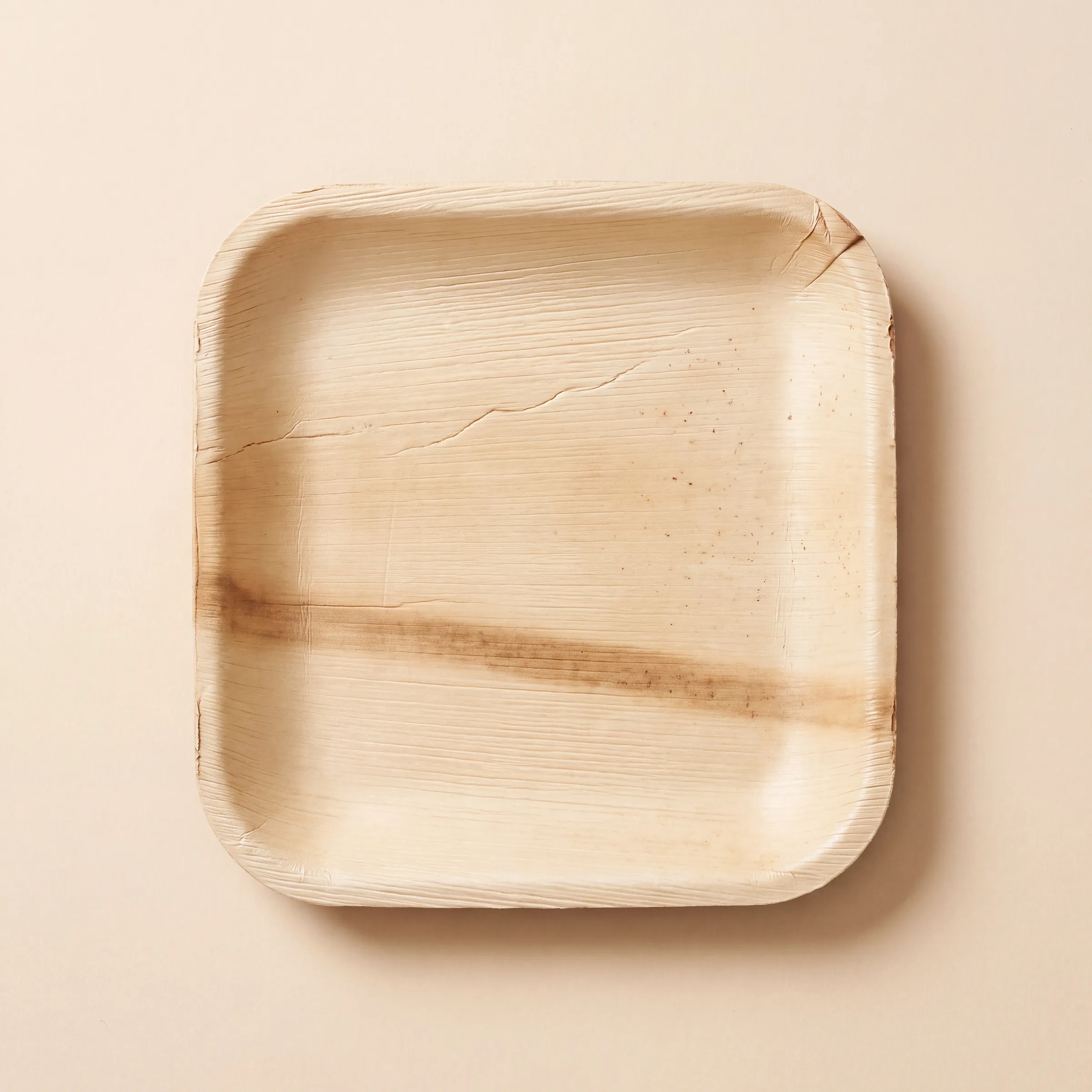
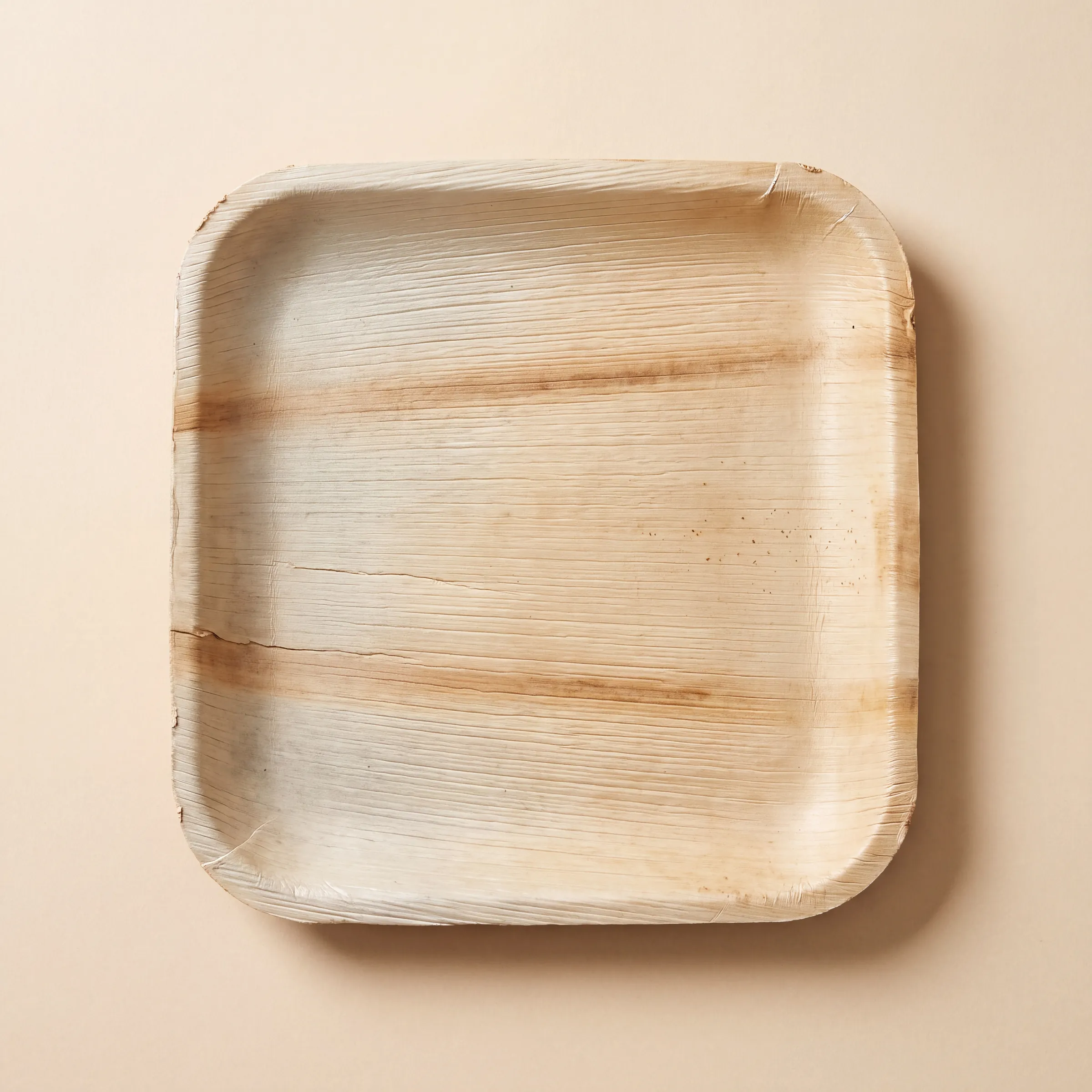
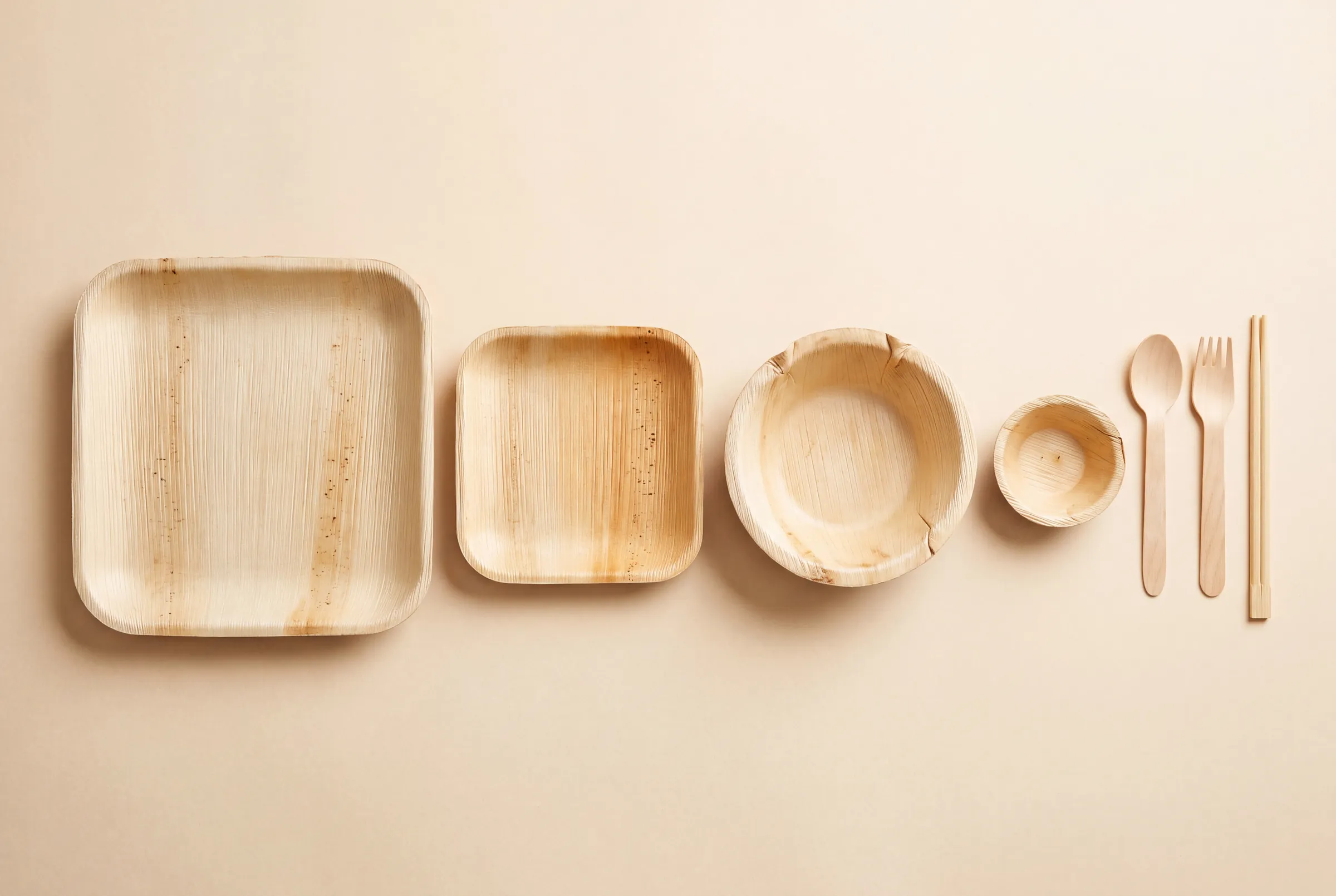
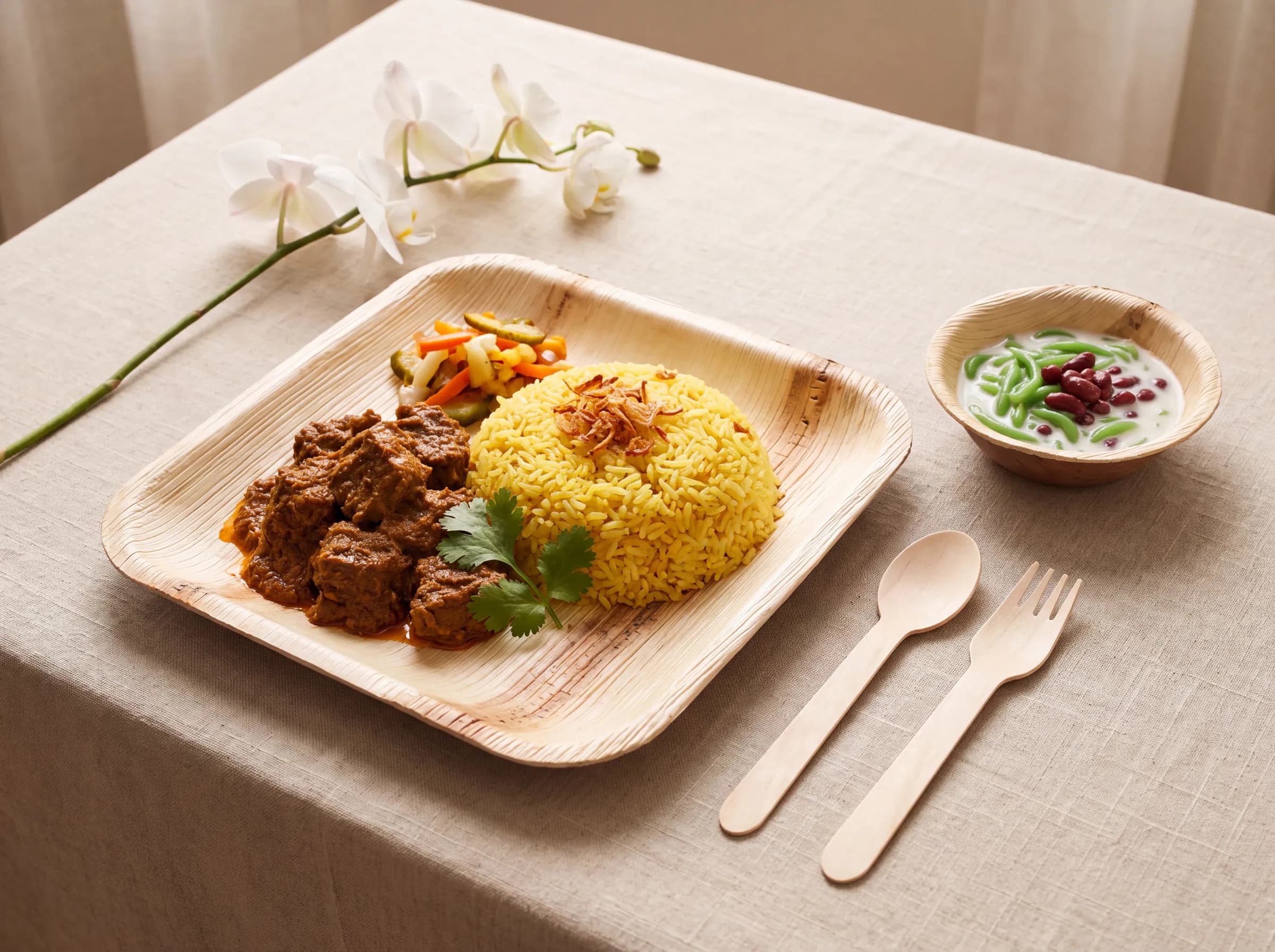
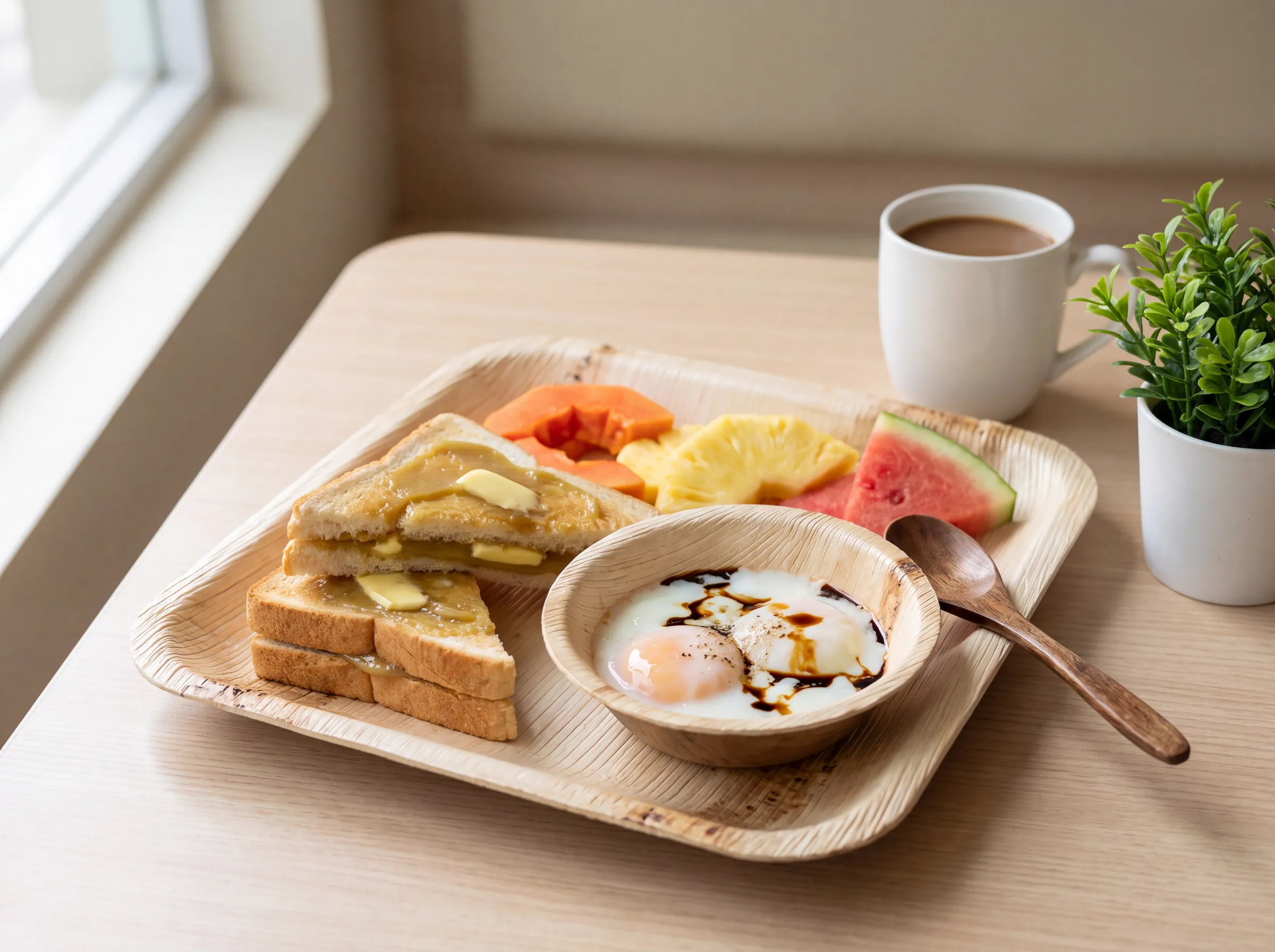
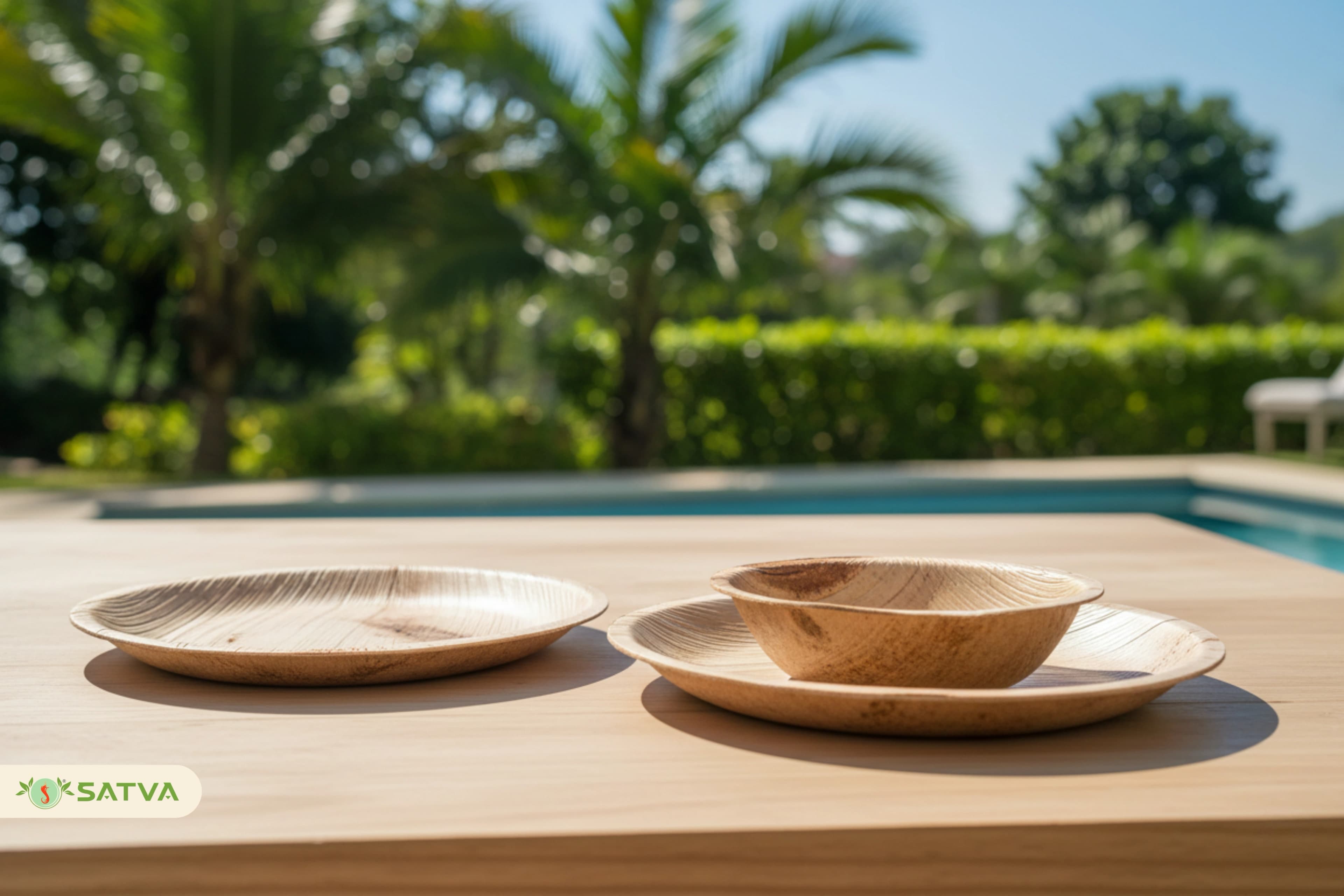
Plastic, PLA and bagasse all look plain: white, beige or smooth. Areca shows the grain of the leaf, from cream to tan, and no two pieces are the same. Every piece of a size comes from the same mould, so sizes match. The colour and grain come from the leaf and change from piece to piece.
That matters more at a wedding dinner or a plated banquet than at a takeaway counter.
After use
Plastic plates in Singapore are burnt or buried. Bagasse composts, but often only in industrial facilities. PLA needs industrial composting.
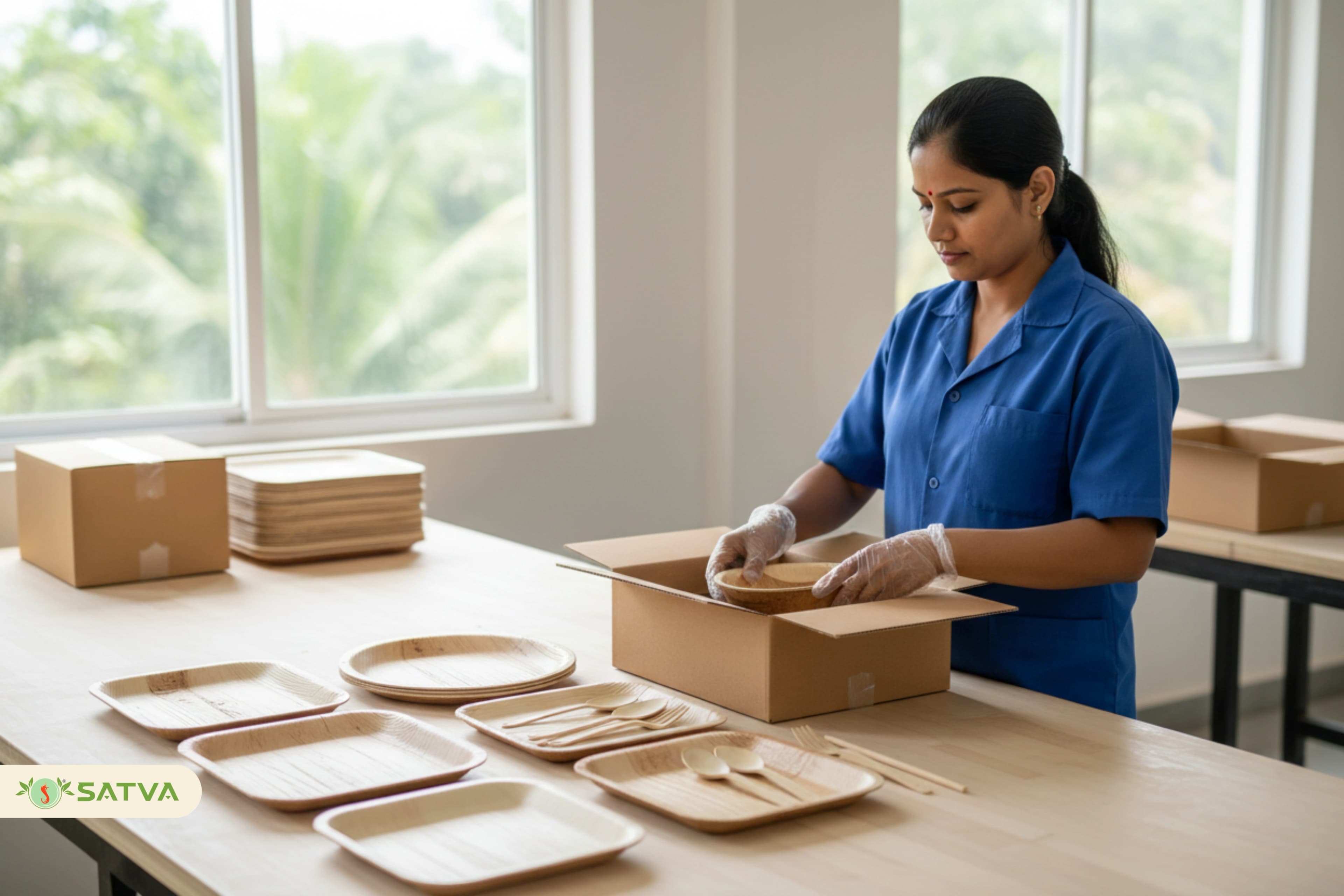
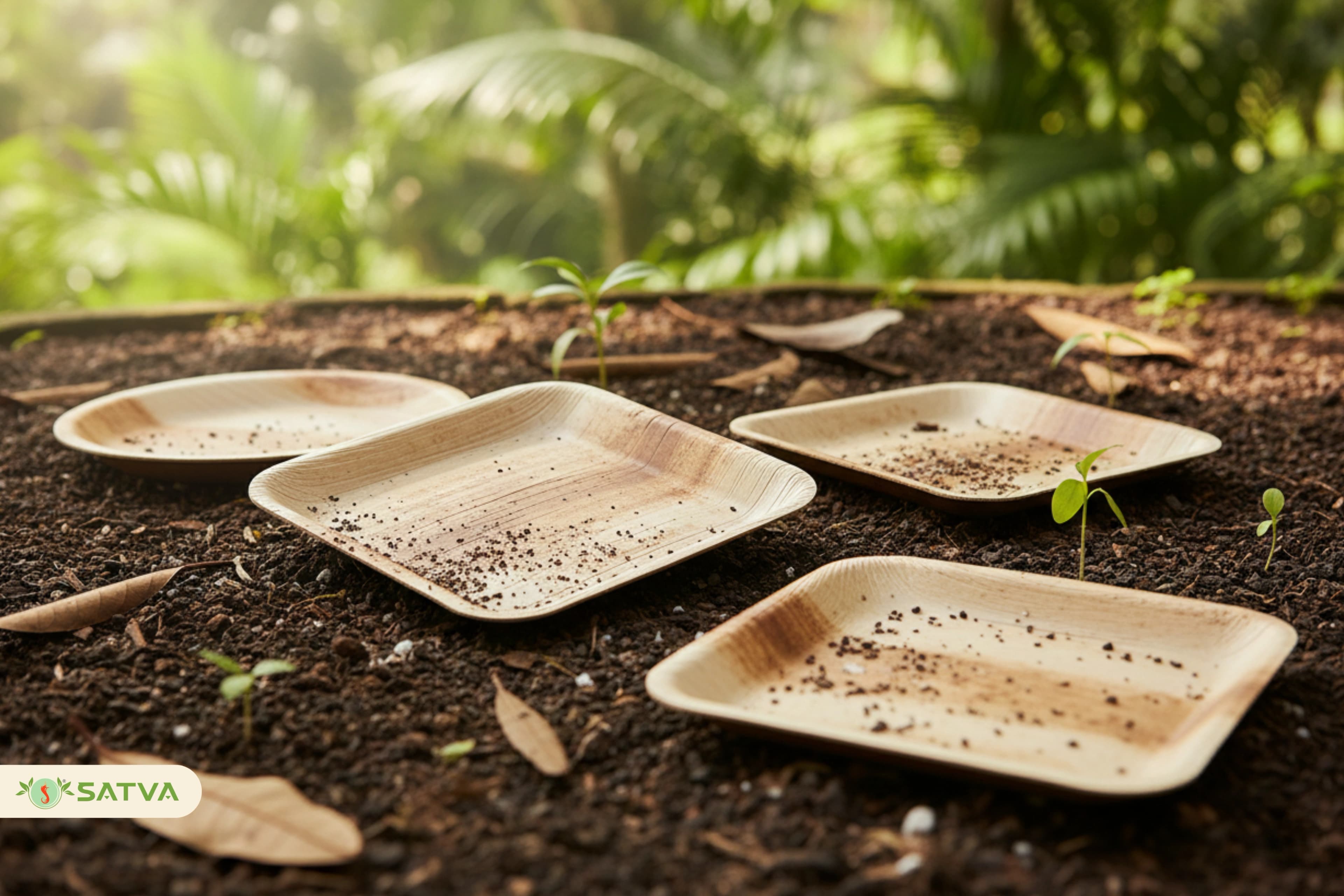
Areca leaf is a plant. Like any fallen leaf, it breaks down in compost. If there's no compost collection, put it in general waste.
When each one makes sense
Be honest about the job. For high-volume takeaway where the lowest price matters most, bagasse is usually the better buy. Plastic is still the lowest-effort option where cost is all that counts and disposal is not a concern.
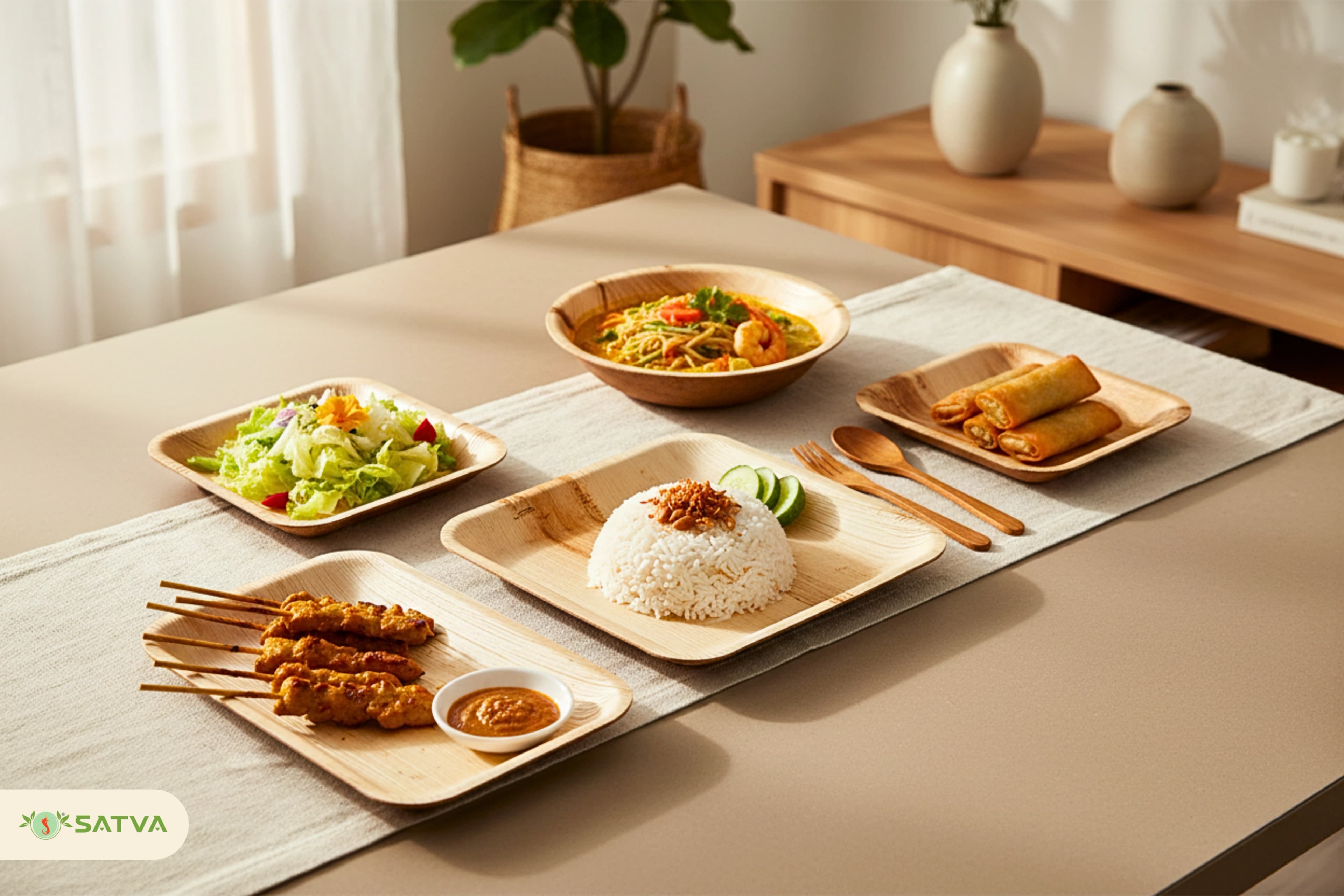
Areca is worth it when the table is part of the event: weddings, banquets and plated menus. Guests see the plate, the food sits well on it, and it holds hot gravy. See how planners use it on our weddings and events page.
Storing areca plates
Areca is a leaf, so treat stock with a little care. Keep cartons in a cool, dry room, off the floor. Keep pieces wrapped until use, and use older stock first.
Send us your menu and headcount
We suggest the pieces and quantities, and reply with a quote and a delivery date.
Frequently asked questions
Are areca leaf plates a good replacement for plastic plates?
For weddings, banquets and plated menus, yes. They hold hot gravy, look like leaf rather than plastic, and break down in compost like a leaf. They cost more per piece, so for high-volume takeaway where the lowest price matters most, bagasse is usually the better buy.
Can areca leaf plates take hot, oily food?
Yes. We test every size with hot gravy, and every plate and bowl holds it. For reheating, use short bursts in the microwave. In SGS testing the plates showed no change after five one-minute rounds with oily food. Not for the oven.
Has anyone tested the plates for safety?
SGS, an independent lab, found no arsenic, no PCP (a wood preservative) and none of the 70 pesticides tested for. It also found no E. coli, Salmonella or coliform bacteria.
Is a tree cut down to make the plates?
No. Areca trees drop their leaves several times a year. Farmers pick up the fallen ones, so no tree is cut.
What should we do with the plates after an event?
Areca leaf is a plant. Like any fallen leaf, it breaks down in compost. If there's no compost collection, put it in general waste.